
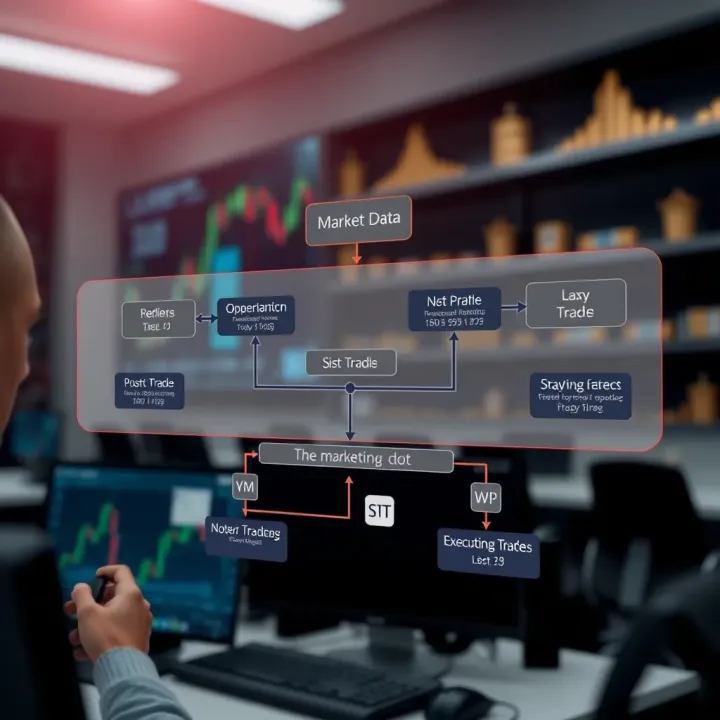
Understanding Free Trading Bots in South Africa
🤖 Learn how free trading bots work, their benefits and risks, plus practical tips for South African traders to automate trades safely and effectively with no upfront cost.
Edited By
Isabella Green
Free margin in forex trading is the cushion of funds you have left in your trading account after your broker sets aside the used margin to keep your current trades open. Think of it as your available spending money to open new trades or absorb losses without getting stopped out.
For example, if you have R10,000 in your account and the used margin for your open positions is R3,000, your free margin is R7,000. This means you have R7,000 available to open more positions or to prevent margin calls if the market moves against you.
Understanding free margin is crucial because it directly affects your trading flexibility and risk. If your free margin drops to zero or below, your broker may close positions automatically to protect both parties from further losses. This is known as a margin call or stop-out.
Free margin acts as a financial buffer—it shows your capacity to stay in the market and try new trades while protecting your existing ones.
Here are key points to keep in mind about free margin:
Free margin = Equity − Used margin
It fluctuates as your account equity changes with profit or loss
It determines if you can open new positions or must close existing ones
South African traders, who often face market volatility and the effects of Eskom's loadshedding on trading hours and platforms, should monitor free margin closely. It helps ensure you’re not caught off-guard by sudden market swings or technical disruptions.
In short, free margin isn’t just a number on your trading platform—it’s a vital indicator of your available resources and risk capacity in forex trading.
Free margin represents the funds in a trader's account available for opening new positions or keeping current ones running after the used margin is accounted for. In forex, since trades involve leverage, it's crucial to know how much free margin you have – it helps you avoid overtrading or getting caught out by market moves.
Understanding margin and used margin: Margin in forex trading is the required amount that your broker holds to keep your positions open. Used margin is the portion of your equity tied up in current trades. For example, if you have R10,000 in your account and open a position needing R2,000 margin, that R2,000 is the used margin while the remainder is not yet committed.
How free margin fits into account equity: Free margin is what’s left after subtracting used margin from your account’s equity (total value including unrealised profits or losses). Say your equity is R12,000 after some profits, with R2,000 used margin, your free margin would be R10,000. This free margin is what you can use to enter new trades or absorb potential losses.
Maintaining open positions: If your free margin drops too low, your account struggles to support open trades, especially if the market moves against you. Keeping a healthy free margin provides a buffer so your broker doesn’t close your positions prematurely.
Opening new trades: Without sufficient free margin, new positions can’t be opened. For instance, if you want to open a new trade requiring R3,000 margin but only have R1,500 free margin, that trade won’t go through. Traders need to monitor free margin to plan entries realistically.
Avoiding margin calls: When free margin runs too low, brokers may issue margin calls to either deposit more funds or close positions to reduce risk. By understanding and managing free margin carefully, traders can avoid unexpected liquidations which might wipe out their accounts.
Free margin acts as your trading safety net and trading fuel – it protects you from forced closures while letting you seize new opportunities.
Keeping a close eye on your free margin is key for trading discipline, especially in volatile markets or when leveraging high.
Calculating free margin is a fundamental skill for anyone trading forex, especially in volatile markets like those South African traders often face. It tells you how much money you have available to open new trades or withstand potential losses on current ones. Without a clear grasp of this, you could easily overextend your trading account, risking margin calls or forced liquidation.
At its core, free margin equals your account equity minus your used margin. Equity represents the total value of your account including any unrealised profits or losses from open trades. Used margin is the amount currently tied up to support your open positions. The difference between these two figures shows you what’s left to trade with or absorb potential adverse price moves.
For instance, if your equity stands at R50,000 because your open trades have made a small profit, and you are using R10,000 as margin for current positions, your free margin will be R40,000. This means you have R40,000 available to open new trades or buffer against losses.
Imagine you start with R100,000 in your trading account and open positions requiring R30,000 margin. Your account's unrealised loss from open trades is R5,000, putting your equity at R95,000 (R100,000 minus R5,000). Your free margin is then:
Equity: R95,000
Used margin: R30,000
Free margin = R95,000 - R30,000 = R65,000
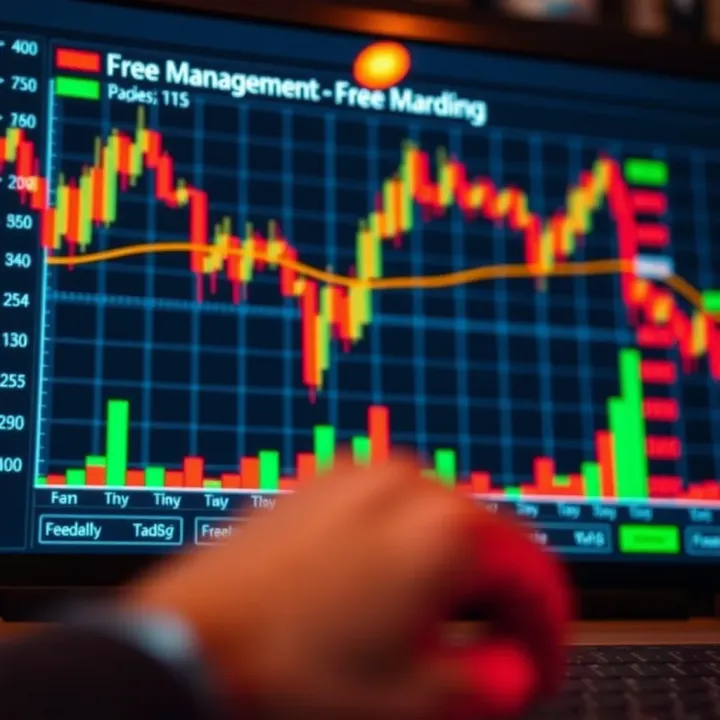
This R65,000 is your safety net and trading power; knowing this figure helps you avoid overcommitting and keeps trades manageable.
Open trades and their unrealised profit or loss affect your equity, thus shifting free margin. If your open positions earn unrealised profits, your equity and free margin increase, giving you room to trade more or safeguard your account. Conversely, unrealised losses shrink equity and free margin, raising the risk of margin calls if not monitored closely.
Leverage impact plays a huge role in margin calculations. Higher leverage means you can control larger positions with less money down, so your used margin is smaller relative to total trade size. While this might seem beneficial, it also means your free margin can drain quickly during adverse price moves. Keeping leverage at a sensible level preserves free margin and lowers risk.
Market volatility can swing your account equity dramatically within minutes. Sharp price moves can quickly turn unrealised profits into losses, affecting your free margin value. Traders should keep an eye on events that might spike volatility—like economic data releases or geopolitical news—and adjust positions accordingly to protect free margin.
Always monitor your free margin closely. It’s the lifeline that helps you stay in the market during ups and downs without getting caught by margin calls or forced closures.
By understanding how to calculate and manage free margin, you can make smarter decisions and better safeguard your trading capital under all market conditions.
Understanding how free margin relates to other forex concepts is key to managing your trading account effectively. It’s not just a standalone figure; free margin interacts closely with margin requirements and account equity, shaping the space you have to trade and manage risk.
Margin is essentially the money you need to put down to open and maintain a trade in your forex account. Brokers require this as collateral for your positions. For example, if you trade with leverage of 1:100 on a R10,000 position, only R100 of your own capital is set aside as margin. This is the amount 'locked' to keep that trade open. Knowing your margin requirements helps you understand how much of your funds are currently reserved against your trades.
Equity reflects the total value of your account at any given moment. It includes your starting balance plus or minus any unrealised profits or losses on open trades. For instance, if you start with R50,000 and have an open trade showing an unrealised profit of R2,000, your equity is R52,000. Equity is a live figure and shifts with market prices, giving you a real-time sense of your financial standing.
Free margin is the difference between your equity and the used margin—the funds locked in open trades. It shows how much capital you have left to open new positions or absorb losses without risking a margin call. Say your equity is R52,000 and your used margin is R10,000; your free margin is R42,000. Monitoring free margin helps you avoid overtrading and keeps your account flexible.
Margin level is a ratio that compares your equity to the used margin, usually expressed as a percentage. You calculate it by dividing equity by used margin and then multiplying by 100. For example, if you have R52,000 equity and R10,000 used margin, your margin level is 520%. A higher margin level means you have more buffer, which reduces the chance of a margin call.
Margin level signals how safe your account is from forced closures. Brokers often set warning levels; a margin level dropping below 100% typically triggers a margin call or forced liquidation of positions. Keeping your margin level comfortably above required thresholds keeps you in control, so you can decide when to close trades or add funds instead of having positions closed unexpectedly.
Keeping track of free margin, margin, and equity together lets you make smarter trading decisions and manage risk effectively.
Understanding these relationships equips traders to manage their funds wisely, anticipate margin calls, and sustain long-term trading health, especially when navigating volatile forex markets common in South Africa and worldwide.
Managing your free margin is key to keeping your trading account in good shape and avoiding costly mistakes. It means keeping enough available funds to cover current positions, open new trades if opportunities arise, and buffer against market swings without triggering a margin call. Being proactive here isn’t just good practice—it can save you from forced liquidations and hefty losses.
Stop-loss orders act as safety nets by automatically closing a trade once a price drops to a certain level. This helps protect your capital from steep losses, especially in volatile markets like forex. For example, if you bought the USD/ZAR at R18.50 expecting it to rise, a stop-loss order at R18.30 limits your loss if the rand strengthens unexpectedly.
Well-placed stop-losses preserve your free margin by capping how much your account equity can fall. Without these limits, a losing trade could eat deep into your free margin, raising the risk of margin calls. Managing stop-loss levels based on your risk appetite keeps your free margin healthier and your trading choices flexible.
Leverage amplifies your trading power, letting you control bigger positions with less money. But it also eats into your free margin because the used margin on each trade increases. For instance, trading with 100:1 leverage on a R1,000 deposit means you could control R100,000 worth of currency, but your free margin shrinks fast if the market moves against you.
Using too much leverage can rapidly drain your free margin if trades go sour, while too little leverage might limit returns. Striking a balance means using enough leverage to make trades worthwhile without stretching your free margin dangerously thin. This delicate balance helps you stick around in the market longer and survive the usual ups and downs.
A falling free margin and a shrinking margin level percentage often signal trouble. When your margin level dips below the broker’s threshold, usually around 100%, you risk a margin call, which is a direct demand to top up your account or close positions. Ignoring these signs can lead to forced liquidation where the broker closes your positions to protect their capital.
You can avoid margin calls by monitoring your account daily, adjusting your stop-loss orders as needed, and not overexposing yourself with too many trades or excessive leverage. Keeping sufficient free margin means you can weather market twists and don’t get caught out during sharp rand movements or unexpected global events. Regularly reviewing your trading plan with margin in mind reduces nasty surprises.
Managing free margin is about more than numbers—it’s about keeping your trading flexible and your capital safe in an unpredictable market.
By staying alert to free margin changes and applying controls like stop-loss orders and restrained leverage, traders can manage risks sensibly and trade with confidence even during wild market swings.
South African forex traders face unique challenges, including local regulations, market volatility, and broker differences. These factors can greatly influence how well you manage your free margin — the money available to open or maintain trades after considering used margin. Optimising free margin helps protect your trades during dips and offers the flexibility to seize new opportunities.
Local regulations and protections play a key role in safeguarding your funds. Brokers regulated by the Financial Sector Conduct Authority (FSCA) must meet standards for transparency, client fund segregation, and dispute resolution. This reduces the risk of fund mismanagement and gives you recourse in case of problems. For example, choosing a broker with FSCA approval ensures your trading account follows South African law and provides some protection against fraud or sudden closures.
Account features affecting margin vary significantly between brokers and account types. Some accounts offer higher leverage options, which increase your potential buying power but also quickly reduce free margin if trades move against you. Others may have lower minimum margin requirements or allow flexible lot sizes. For instance, a mini account might let you open smaller positions, preserving more free margin and reducing the chance of margin calls, which is especially handy during unpredictable market swings.
Real-time margin monitoring is crucial. Most modern platforms display free margin, used margin, equity, and margin level live. This instant feedback allows you to keep close tabs on your margin status and act quickly if it falls to risky levels. Imagine watching your free margin dip during a sudden rand weakening — being able to see this in real time helps you close or adjust positions before hitting a margin call.
Alerts and notifications offered by platforms complement margin monitoring. Setting alerts for low margin levels or price movements prevents unwelcome surprises. You could, for example, receive a message on your phone when your margin level drops below 100%, prompting you to top up or reduce exposure. This tool is especially useful if you cannot watch the screen constantly.
Position sizing strategies must reflect your free margin to balance risk and opportunity. Instead of risking a large chunk of your balance on one trade, dividing your capital into smaller portions keeps some free margin in reserve. For example, allocating just 2–3% of your capital per position leaves room to handle adverse market swings without triggering forced liquidations.
Adapting for local market conditions means considering factors like rand volatility, load shedding impacts, and economic data release timings. These can cause rapid price changes affecting your margin. Planning trades around such events or adjusting position sizes during high-risk periods helps maintain adequate free margin. For example, reducing trade size ahead of a SARB interest rate decision can shield your account from sudden margin strain.
Managing your free margin isn't just about numbers; it's about making measured decisions that suit South Africa’s unique trading environment.
Optimising free margin is essential for South African traders not just to avoid margin calls but to maintain long-term control over their trading journey and capital preservation.
🤖 Learn how free trading bots work, their benefits and risks, plus practical tips for South African traders to automate trades safely and effectively with no upfront cost.
Curious about FX trading? 🌍 Learn how currency markets work, key strategies, risks, and how South Africans can confidently trade forex while protecting their investments.
🌍 Understand forex sessions, their busy hours and overlaps to better plan your trades, manage risk, and spot opportunities in global markets from South Africa.
🤖 Discover how forex trading robots work, their pros and cons, setup tips, and how to manage risks for smarter trading decisions in South Africa's forex market.
Based on 9 reviews