

Understanding Forex CFDs for South African Traders
📈 Learn how Forex CFDs work in South Africa, spotting risks and seizing opportunities. Get practical tips tailored for local traders ready to trade with confidence.
Edited By
Henry Lawrence
Contracts for difference (CFDs) provide a flexible way for South African traders to speculate on the price movements of various assets without owning the underlying products. This setup appeals particularly to those who want exposure to a wide range of markets—such as shares on the JSE, global indices, commodities like gold or platinum, and even forex pairs—without the full cost or hassle of direct ownership.
The key appeal of CFDs lies in their simplicity and accessibility. You essentially enter an agreement with a broker to exchange the difference between an asset's price when you open your position and its price when you close it. If the asset price moves in your favour, you profit; if it moves against you, you take a loss. This mechanism allows traders to go long (buy) or short (sell) with relative ease.
CFDs also offer the benefit of leverage, meaning you only need to put down a fraction of the total trade value, known as the margin. For instance, a 10% margin requirement means you can control a R100,000 position with only R10,000 upfront. While this can magnify your profits, the flip side is that losses are amplified too. That makes risk management crucial when trading CFDs.
Remember, CFDs carry substantial risk and are not suited for everyone. In South Africa, regulation by the Financial Sector Conduct Authority (FSCA) requires brokers to provide clear risk disclosures, but it remains vital to trade cautiously and understand your exposure.
CFD trading suits those who want to move quickly between different markets or hedge existing investments. For example, say you hold shares in a mining company listed on the JSE but expect short-term volatility due to global commodity price shifts. You might short a related CFD to offset potential losses. Alternatively, a trader might use CFDs to speculate on the rand-dollar exchange rate during tax season when currency swings are common.
In summary, CFDs offer South African traders versatile tools to participate in diverse markets with lower capital and flexible strategies. However, they require solid understanding, disciplined risk controls, and careful choice of reputable brokers. The sections that follow will take you through how CFDs work in detail, practical examples, plus the benefits and risks specific to the SA context.
Understanding what Contracts for Difference (CFDs) are and how they work is key for any South African trader looking to navigate this market effectively. CFDs allow you to speculate on price movements of various assets without needing to own the underlying item directly. This can be a practical way to gain market exposure with smaller capital, but it also brings unique risks and strategies you need to grasp early on.
A Contract for Difference is a financial agreement made between a trader and a broker. The idea is simple: you agree to exchange the difference in price between the asset's opening and closing values. If the asset's price moves in your favour, you profit the difference; if it moves against you, you incur a loss. Crucially, you never own the asset itself—only the contract that tracks its price changes.
Think of it like a wager on whether the price will rise or fall, but unlike betting, you can apply leverage, meaning you trade with borrowed funds relative to your stake.
Trading CFDs involves betting on the price direction of assets by opening either a "buy" (going long) or "sell" (going short) position. This flexibility is useful in volatile markets where prices swing both ways. Your broker holds a margin, a fraction of the full trade value, which manages your exposure. For example, if you want exposure of R10,000 but the margin requirement is 10%, you only need R1,000 upfront.
The profit or loss depends on the price movement multiplied by your trade size. However, leverage magnifies both gains and losses, so managing position size and risk is essential. To complete the trade, you close your position by selling if you initially bought, or buying back if you initially sold.
CFD trading is a double-edged sword—it allows greater participation with less capital but demands tight risk control.
Shares CFDs let you speculate on price moves of individual companies listed on stock exchanges. For South African traders, this often means equities listed on the Johannesburg Stock Exchange (JSE) like Sasol, Naspers, or Shoprite. Instead of buying shares directly, you take a CFD position on those shares’ price changes.
This setup is useful for short-term traders seeking exposure without committing large sums or dealing with share certificates. Plus, you can go short to profit when a share price drops, an option not always straightforward with traditional share trading.
Indices represent a basket of shares, grouped to reflect a market segment’s overall performance, like the JSE Top 40. CFD indices trading lets you capitalise on the broader market trends rather than individual company movements.
For instance, if you believe the JSE Top 40 index will rise due to favourable economic news, you can open a long CFD on the index. Conversely, a drop in commodity prices affecting the index could present a short opportunity. Indices provide diversification since they spread risk across multiple companies.
CFDs also cover commodities like gold, platinum, crude oil, and agricultural products. South African traders often watch gold and platinum closely due to the local mining sector's importance.
Trading commodity CFDs means you speculate on price changes without needing to physically store or deliver the goods. For example, if you expect global gold demand to rise because of inflation fears, going long on gold CFDs can capture gains purely from price movements.
Currency CFDs (also called forex CFDs) involve betting on the value of one currency relative to another, such as the South African Rand (ZAR) against the US Dollar (USD). Forex markets operate 24/7 and are highly liquid, making them attractive for active traders.
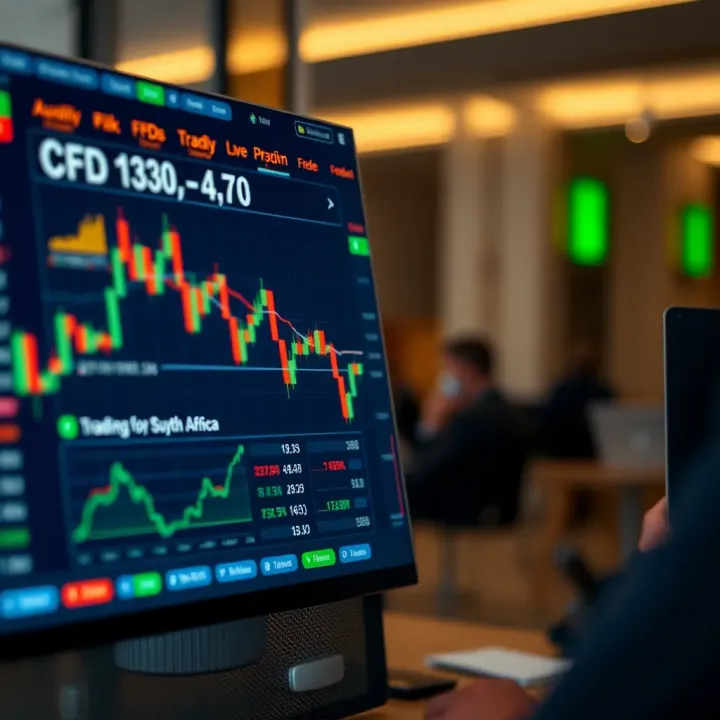
For South African traders, currency fluctuations matter because of import/export businesses and travel costs. If you predict the rand will weaken against the dollar, taking a short CFD position can profit from that move. Currency CFD trading demands understanding macroeconomic factors, political events, and global trade tensions.
Each of these asset classes offers unique benefits and challenges for CFD traders. Knowing how they work will help you decide where to focus your efforts and tailor your trading strategy accordingly.
CFDs provide South African traders with unique perks not often found in traditional investing. These contracts let you speculate on price shifts of various assets without owning them outright, which opens doors for flexibility and opportunities that suit different trading styles and capital levels.
CFD trading allows access to a wide range of markets — from local shares on the JSE to global commodities like gold or oil, indexes, and currencies. This variety means you can spread your bets across sectors you understand or want to explore. Importantly, CFDs often require a smaller upfront deposit, known as margin, compared with buying the actual asset outright. For example, rather than spending tens of thousands on shares, you might only need a fraction of that as margin, making it easier to diversify your portfolio while locking less capital in one place.
Unlike traditional share ownership, CFDs let you take positions on both price rises and falls. If you anticipate the platinum price to drop, you can open a short CFD position and potentially profit from the decline. This bidirectional trading fits well with fast-moving markets or when you want to hedge existing investments. It adds an extra layer of strategy to your trading toolkit, allowing you to make moves even when the market is bearish.
One of the biggest draws of CFDs is leverage, letting you control a larger exposure for a relatively small amount of capital. For instance, if a broker offers 10:1 leverage on a share, a R1,000 margin can buy exposure to R10,000 worth of shares. This magnifies gains, but be mindful: losses can also multiply quickly. Traders should treat leverage cautiously to avoid wiping out their balance faster than expected.
CFDs can be practical for South African traders with limited capital, offering market diversity and strategic options beyond conventional share trading, but careful risk management remains essential.
In summary, CFDs give you a flexible way to tap various markets with less money upfront, trade on both price directions, and use leverage to optimise returns. But these advantages come with responsibility — understanding each element can help you shape a balanced trading approach suited to South Africa’s investing landscape.
For South African traders, understanding the risks involved in Contracts for Difference (CFD) trading is not just useful – it’s essential. CFDs offer tempting opportunities through leverage and quick trades, but the potential to lose more than your initial investment is real. Knowing these risks helps you trade confidently and avoids nasty surprises.
Leverage lies at the heart of CFD trading, allowing you to control a larger position with a smaller amount of capital. This can multiply profits, but it also magnifies losses. Imagine buying a CFD on a JSE-listed share with 10:1 leverage. A 5% drop in the share price doesn’t just mean a 5% loss; it means a 50% loss on your invested amount. If you’re not careful with leverage, your losses can wipe out your trading capital quickly – sometimes faster than you expect.
South African brokers regulated by the FSCA typically set limits on leverage for retail clients, but it’s important to check these limits before you start trading. Using lower leverage or none at all can reduce risk, and always having stop-loss orders in place adds an extra safety net.
The South African financial markets, like others globally, can be volatile. Price swings caused by economic reports, political shifts, or unexpected news can work both for and against you. For example, unexpected Eskom load-shedding announcements can move market prices sharply within minutes.
This volatility can lead to rapid losses if your position moves against you, especially when leveraged. It’s wise to monitor markets closely and avoid taking positions larger than you can afford to lose. Practising proper risk management and avoiding emotional decision-making are critical steps to keep your losses manageable.
Trading CFDs isn’t a guaranteed way to profit, and not managing risk can turn a good idea into a costly mistake.
Unlike traditional share ownership, CFD trading depends on the broker (the counterparty). If the broker faces financial trouble or lacks proper regulation, your funds could be at risk. South African traders should work only with FSCA-licensed brokers who adhere to strict rules and hold client funds separately from their operating capital.
Additionally, the regulatory landscape for CFDs varies worldwide. Some countries ban or limit CFDs, but South Africa allows regulated trade under FSCA oversight. Always check your broker’s license status and read investor protection details carefully.
In short, while CFDs offer flexibility and opportunity, the risks around leverage, market unpredictability, and counterparty reliability must be respected. Knowing these challenges and acting accordingly protects your money and trading reputation.
Understanding the regulatory setup for Contracts for Difference (CFDs) in South Africa is vital for anyone trading these financial instruments locally. It protects you as a trader and ensures brokers operate transparently and fairly within the country’s legal framework. This environment offers a level of security that’s especially important given the risks involved in CFD trading.
The FSCA stands as the watchdog for financial markets in South Africa. It sets the rules that CFD brokers and platforms must follow. For example, the FSCA requires brokers to register and obtain a licence, ensuring they meet strict standards around capital adequacy and client fund segregation. This means your money should be kept separate from the broker's own funds, reducing the risk of it being misused.
Besides registration, the FSCA monitors brokers to ensure they comply with conduct standards. If a broker fails to meet these, the FSCA can suspend or revoke licences. This oversight is crucial because it weeds out irresponsible operators, helping traders avoid scams or unfair practices.
Choosing an FSCA-licensed broker is more than just ticking a box — it directly affects your protection as a trader. Licensed brokers must adhere to guidelines such as providing clear risk warnings and transparency on fees and charges. Traders benefit from this as it levels the playing field, making it harder for shady operations to trick unsuspecting users.
For example, MTI Markets and IG South Africa are among brokers registered with the FSCA, giving local traders access to regulated CFD trading services with some measure of comfort. Traders should always verify a broker’s registration status on the FSCA’s official listings before opening an account.
CFD trading in South Africa must align with local financial laws such as the Financial Advisory and Intermediary Services Act (FAIS). This act governs how brokers give advice and manage client relationships, ensuring traders receive information suited to their knowledge and financial position.
Moreover, brokers must follow the Protection of Personal Information Act (POPIA), safeguarding your data and ensuring confidentiality in your trading activities. This is particularly significant in the digital age where data breaches can leave traders vulnerable.
Sticking to regulatory requirements isn’t just about ticking boxes. For South African CFD traders, it means trading in a safer environment, with access to recourse should disputes arise.
In summary, the FSCA’s role, strict licensing criteria, and local financial laws combine to build a framework that helps protect traders amidst the uncertainties of CFD markets. Knowing this can help you pick trusted partners and trade with greater confidence here in Mzansi.
CFD trading presents unique opportunities but also distinct challenges, especially for South African traders who must navigate regulatory frameworks, market volatility, and local economic conditions. Practical tips aren't just handy—they're essential for managing risk and making informed decisions. This section offers concrete advice tailored to the South African context, helping traders select a reputable broker, manage risks, and understand the true costs involved.
Selecting a broker licensed by the Financial Sector Conduct Authority (FSCA) is a top priority. This ensures your funds receive protection under South African law and the broker adheres to market rules. For instance, FSCA-regulated brokers like IG, Plus500, and HotForex provide transparent pricing and comply with investor protection measures. Beware of offshore brokers without FSCA oversight; while they may offer attractive terms, the risk of losing funds without recourse is high.
Consider factors like platform stability, ease of deposits and withdrawals, and access to local payment methods like EFT or SnapScan. A strong customer service presence in South Africa also helps address issues promptly.
Stop-loss orders act as a safety net by automatically closing your position once a set loss threshold is reached. For example, if you buy a CFD on a JSE-listed share at R100 and set a stop-loss at R95, your position will close if the price drops to R95, limiting further losses. This tool is crucial in volatile markets to avoid emotions driving decisions and to protect capital during unexpected price swings.
CFDs allow trading on margin, but high leverage means small price moves can cause large gains or losses. South African brokers often set maximum leverage ratios (e.g., 1:10 or 1:20) to help shield traders from excessive risk. It’s wise to use lower leverage than the maximum allowed, keeping exposure manageable. For example, rather than maxing out a R10,000 account with 1:20 leverage, better to trade with 1:5 to avoid significant drawdowns if the market moves against you.
Putting all your eggs in one basket is risky—diversifying CFD positions across different assets like shares, indices, and commodities can smooth out volatility effects. If your exposure is split between a South African blue-chip share, an international index, and gold, losses in one sector might be offset by gains in another. Diversity helps balance your portfolio and reduces vulnerability to shocks in specific markets or sectors.
The spread is the difference between the buy and sell price quoted by your broker. For popular CFD instruments like the FTSE/JSE Top 40 index, spreads tend to be tighter (often a few points), whereas less liquid stocks might have wider spreads. Some brokers also charge commissions per trade, which can add up especially for frequent trading. Being aware of these costs helps keep trading expenses reasonable and ensures you’re not eroding profits unnecessarily.
Holding CFD positions overnight often incurs financing fees because of the borrowed funds involved in leverage trading. This charge is calculated daily and depends on prevailing interest rates plus a broker’s markup. For instance, if you hold a currency CFD on the USD/ZAR pair after market close, you’ll pay or receive overnight financing depending on the interest rate differential. Traders who plan to hold positions longer need to factor this cost into their overall strategy.
Knowing your broker’s fee structure and potential financing costs upfront lets you trade smarter and keeps surprises off your statement. Understanding these practical aspects is just as important as knowing the markets.
Implementing these tips helps South African traders approach CFDs with a clear head, armed with tools to manage risk, control costs, and choose trustworthy brokers.
📈 Learn how Forex CFDs work in South Africa, spotting risks and seizing opportunities. Get practical tips tailored for local traders ready to trade with confidence.
📈 Explore the South African deriv market, its key players, instruments, and risks. Get practical tips, regulatory insights, and smart trading advice tailored for local investors.
💹 Learn how CFD brokers operate, costs involved, regulatory rules for South African traders, and key tips for picking the right service in your trading journey.

Explore FBK Markets, an online platform offering forex, commodities, indices & crypto trades. Get insights on accounts, fees & safety for South African traders 🇿🇦📈
Based on 6 reviews