

Understanding Signal Trading in South Africa
📈 Explore signal trading for South African traders: learn how to pick reliable signals, balance pros and cons, and boost your market moves effectively.
Edited By
Charlotte Blake
Contract for Difference (CFD) brokers play a significant role in South Africa's trading scene, providing access to various financial markets without requiring ownership of the underlying asset. These brokers act as intermediaries, enabling traders to speculate on price movements of stocks, commodities, indices, and forex.
CFD trading lets you profit from both rising and falling markets by going long or short. For example, if you expect the price of a local resource share to drop, you can sell a CFD without purchasing the actual shares. This flexibility appeals to many South African traders seeking opportunities beyond traditional investments.
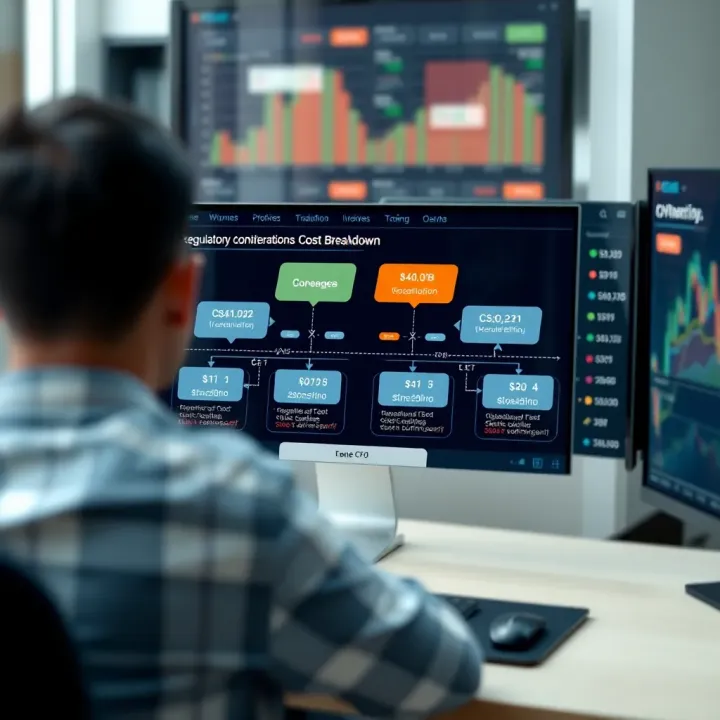
CFD brokers earn primarily through spreads—the difference between buy and sell prices—and sometimes via commissions or overnight financing fees. It's key to understand these costs upfront, as they affect your overall profitability. Most reputable brokers display their fee structures clearly, but differences exist, particularly involving local vs. international platforms.
South African traders should pay attention to regulatory compliance. The Financial Sector Conduct Authority (FSCA) oversees financial services, including CFD providers operating within the country. Choosing an FSCA-registered broker reduces risks associated with fraud or mismanagement. Bear in mind that some brokers based offshore may offer attractive terms but lack local regulatory oversight.
"Trading CFDs through FSCA-regulated brokers adds a crucial layer of protection, helping traders avoid common pitfalls linked to unregulated platforms."
When selecting a CFD broker in South Africa, consider factors such as platform reliability, access to markets, cost transparency, and customer support. Demo accounts offer a risk-free way to test features and execution speed before committing real funds.
In summary, understanding how CFD brokers operate, their costs, and regulatory status is essential. Grasping these basics sets the foundation for more advanced topics, such as trading strategies and risk management, which are vital for navigating the South African CFD landscape safely and effectively.
Grasping what a CFD broker does is fundamental if you want to trade contracts for difference (CFDs) successfully in South Africa. A CFD broker acts as the middleman between you and the financial markets, allowing you to speculate on price movements without owning the actual assets. This setup opens up opportunities to trade a wide range of instruments—from shares listed on the JSE to global commodities and forex pairs—without the usual barriers of direct ownership.
When you trade a CFD, you’re essentially entering into an agreement to exchange the difference in value of an asset from the moment you open the trade to when you close it. Unlike buying physical shares or commodities, you never own the underlying asset itself. For example, buying a CFD on Sasol shares allows you to profit from price changes without actually holding the stock or dealing with settlement processes.
This means you can gain exposure to markets without the usual costs and complexities related to outright ownership, such as stamp duty or custody fees. However, the flip side is that CFD trading carries its own risks, especially due to leverage which can amplify both gains and losses.
CFD trades are structured so that you either buy (go long) if you expect the price to rise or sell (go short) if you think it will fall. The broker quotes two prices—the buy (ask) and sell (bid) prices—which include their spread (the broker’s commission embedded in the price difference).
Trades often require a margin deposit rather than the full value of the position, allowing you to control larger amounts with less capital. For instance, with a margin requirement of 5%, you could control R100,000 worth of CFDs with just R5,000. But this also means your position is more sensitive to market swings.
A key role of the broker is to provide access to various financial markets that would otherwise prove difficult or expensive to reach on your own. Most local South African CFD brokers work with global liquidity providers to pool together the best bid and ask prices. This enables you to trade instruments ranging from Naspers shares on the JSE to oil and gold futures without leaving your computer.
By linking traders to these markets, brokers enable smooth execution of orders that reflect real-time price movements. Without such connections, retail traders would face significant obstacles accessing multiple asset classes.
A good CFD broker also offers an intuitive trading platform packed with tools to help you make informed decisions. This includes live price charts, risk management features like stop-loss orders, and account management dashboards.
For example, local brokers might provide platforms such as MetaTrader 4, MetaTrader 5, or their customised proprietary software tailored to South African traders’ needs. These platforms often support mobile trading apps, allowing you to monitor and adjust trades on the go—handy when loadshedding hits and you’ve got to act fast.
Choosing a broker that combines solid market access with reliable, user-friendly platforms and helpful trading tools can make a considerable difference in your CFD trading experience.
Understanding these fundamentals sets the stage for learning about CFD types, costs, regulations, and choosing the right broker in South Africa. It’s the first step in navigating this complex but accessible trading arena with confidence.
CFD brokers usually offer a broad range of contracts for difference across diverse underlying assets. Understanding the types available helps traders pick markets that suit their strategy and risk tolerance. In South Africa, this variety is key, given the local appetite for shares, commodities, and emerging digital assets.
Shares and indices provide straightforward exposure to company performance and broader market trends. For instance, CFD traders in South Africa might focus on JSE-listed shares like Sasol or Naspers, or indices such as the FTSE/JSE Top 40. Trading these CFDs lets you speculate on price movements without owning the actual shares, which can reduce upfront costs and simplify position management.
Forex CFDs appeal to traders looking to capitalise on currency fluctuations. The South African rand (ZAR) pairs like USD/ZAR or EUR/ZAR are especially relevant given their sensitivity to political and economic news. Forex CFD trading allows for high liquidity and the ability to go long or short easily, which can be useful for hedging or speculative purposes.
Commodities like gold and oil remain favourites among CFD traders due to their global economic importance and inherent volatility. Gold CFDs allow South African traders to tap into the metal's role as a hedge against inflation and currency depreciation. Meanwhile, oil CFDs track crude prices influenced by geopolitical developments, OPEC policies, and demand shifts, offering opportunities for active traders.
Cryptocurrency CFDs have surged in popularity despite regulatory grey areas. These contracts let traders speculate on prices of bitcoin, ethereum, and other digital coins without holding the actual crypto. That avoids the complexities of wallets and exchanges. However, cryptocurrency CFDs can be highly volatile, so South African traders need to manage risks carefully.
Sector-specific CFDs cater to those interested in focused market segments, such as tech, mining, or renewable energy sectors. Options here might include CFDs on indices tracking mining stocks or CFD contracts on companies specialising in solar power. This enables traders to align exposure with thematic trends or research insights.
Knowing what types of CFDs brokers offer helps you target markets where you have expertise or interest, making your trading approach more informed and effective.
Overall, be sure to check that your chosen broker lists the CFDs that fit your strategy and provides reliable pricing and execution, especially on South African market hours.
Understanding how CFD brokers earn is essential for anyone trading contracts for difference in South Africa. Knowing their revenue streams helps you anticipate costs and make more informed decisions, especially when comparing brokers. Brokers mainly profit through spreads, commissions, and overnight fees, each affecting your trading expenses differently.
The bid-ask spread is the difference between the buying price (bid) and the selling price (ask) of a CFD. This gap effectively acts as a cost to you as a trader, because you buy at the higher ask price and sell at the lower bid price. For instance, if a gold CFD has a bid of R29,500 and an ask of R29,510, the R10 difference represents the spread. This cost matters when entering and exiting trades and is typically measured in points or pips.
On popular assets like JSE indices or major forex pairs, spreads tend to be tighter, sometimes just a few points. However, less liquid or more volatile assets often carry wider spreads, increasing your trading costs. Recognising spread size helps you understand when a trade needs to move in your favour just to break even.
Some CFD brokers charge a commission on top of the spread, especially for shares CFDs. This commission can be a flat fee or a percentage of the trade value. For example, a broker might charge R30 per trade or 0.05% of the trade amount, whichever is higher. This commission adds to your overall cost and can impact your strategy, particularly if you trade frequently.
Not all brokers levy commissions; some bundle costs into wider spreads instead. While zero-commission offers may sound attractive, they often compensate with higher spreads. It’s important to check both the spreads and commission fees to see what works out cheaper based on your trading style.
CFD trades often involve leverage, meaning you only put up a fraction of the trade’s full value. When you hold positions overnight, brokers charge a financing fee (also called a rollover or swap fee). This fee covers the cost of borrowing funds to maintain your leveraged position.
Say you open a CFD on an oil contract and hold it past market close; you’ll typically see a small daily debit in your account reflecting overnight financing. This fee fluctuates with interest rates and underlying asset costs, but can add up, especially for longer-term traders or those holding large positions.
Beyond spreads, commissions, and overnight fees, some brokers apply other charges. These can include inactivity fees if your account remains dormant, withdrawal or deposit fees, and data feed subscriptions for premium market information.
South African traders should also be cautious of currency conversion fees if trading CFDs priced in foreign currencies. For example, using Rands to trade a US-based index CFD might incur conversion costs, slicing into profits.
Always read the fine print on fee schedules your broker provides. These seemingly small costs can significantly affect your overall returns, especially when trading regularly or over extended periods.
In summary, understanding how CFD brokers make money through spreads, commissions, and overnight charges will help you keep control of your trading expenses. Comparing these fees upfront allows you to pick a broker that suits your trading style and wallet, without surprising costs eating into your gains.
Regulation is a key pillar for South African traders when choosing a CFD broker. It offers a safety net by ensuring brokers operate transparently and ethically, reducing the risk of fraud or unfair practices. Traders benefit not just from lawful trading environments but also from protections around their funds and personal information. In South Africa, a regulated broker is more likely to comply with local laws and respond correctly in case of disputes.
The Financial Sector Conduct Authority (FSCA) is South Africa's main watchdog for financial services, including CFD brokers. Its role is to oversee broker conduct, making sure firms adhere to rules that protect clients and maintain market integrity. For instance, an FSCA-registered broker must treat client funds separately from its own trading capital. This oversight adds a layer of trust that traders can lean on.
Further, FSCA compliance means brokers must provide clear information on fees, terms, and risk factors, helping traders make informed decisions without hidden surprises. South African traders should prioritise brokers authorised by the FSCA to avoid falling prey to unregulated operators popping up in the otherwise unmonitored offshore market.
Regulatory licences South African traders should look for typically include FSCA approval numbers displayed on broker sites and marketing material. Alongside FSCA licensing, some brokers carry international licences such as those from the UK’s Financial Conduct Authority (FCA) or the Australian Securities and Investments Commission (ASIC). While these add credibility, FSCA registration is crucial to ensure local accountability and easier dispute resolution.
Before signing up, traders should verify a broker’s licence status directly through the FSCA’s public registers. This simple step can save a lot of trouble down the line, especially since some offshore brokers falsely claim regulatory endorsements.
Segregated client accounts are a critical factor in broker safety. This means client money is held in bank accounts separate from the broker’s operational funds. Such separation safeguards your deposits from being used to pay a broker’s debts or to cover losses. For example, if the broker clashes with creditors, your funds in a segregated account remain untouched.
It’s worth confirming with your broker about their bank and policies regarding client fund segregation. FSCA-regulated brokers must provide evidence of these accounts as part of their compliance requirements.
Data protection including POPIA compliance addresses the confidentiality of your personal and financial information. The Protection of Personal Information Act (POPIA) sets the standards for how brokers handle client data. A compliant broker will have measures like secure servers, encrypted communications, and clear privacy policies.
Beyond legal compliance, strong data protection helps prevent identity theft and unauthorised access. In the digital age, where your trading account links to bank details and identification documents, this is not just a regulatory need but a practical necessity. Always check what a broker’s privacy practices are before sharing sensitive info.
Trading CFDs carries risks but ensuring your broker operates under FSCA regulation, keeps your funds segregated, and protects your data under POPIA helps you trade with confidence and peace of mind.
Picking the right CFD broker matters more than just ticking a box. For South African traders, it’s about finding a service that fits your trading style, keeps costs transparent, and offers strong support amid local market nuances like loadshedding or fluctuating Rand values. A good broker not only connects you to global markets but also helps you manage risks with reliable platforms and clear fees.
Costs can eat into potential profits fast. Look beyond the visible spreads—the difference between buy and sell prices—and check for extra fees such as commissions, withdrawal charges, or inactivity fees. For instance, some brokers might offer attractive spreads on major indices like the JSE Top 40, but their overnight financing fees could be steep. Understanding all costs upfront avoids surprises and helps you compare brokers on an apples-to-apples basis.
A complex or sluggish trading platform can cost you valuable opportunities. South African traders should prioritise brokers who provide intuitive platforms with features like real-time charts, customised indicators, and fast execution. Mobile app stability is also key, especially if you’re trading during a job or on the move. Features such as risk management tools—stop-loss, take-profit orders—and demo accounts allow you to test strategies without risking real cash, which is especially helpful for novices.
Trading can be stressful. When technical or account issues pop up, quick and helpful customer support changes the game. South African traders benefit from brokers who offer localised support in English or Afrikaans and accessible contact options—phone, WhatsApp, or live chat. On top of that, solid educational resources like webinars, tutorials, or market analysis help you sharpen your skills and stay updated on local and global market conditions.
Choosing a broker with no Financial Sector Conduct Authority (FSCA) regulation can be a risky bet. Such brokers often operate without proper safeguards, increasing chances of fund mismanagement or fraud. FSCA regulation means brokers must keep client funds separate from their own accounts and adhere to strict conduct rules, giving traders added protection. Even if an offshore broker offers tempting bonuses, it’s safer to stick with those with at least FSCA recognition.
Be wary of brokers advertising guaranteed profits, huge bonuses, or zero-risk trading. These offers often mask hidden conditions such as high trading volume requirements or withdrawal restrictions. They may also encourage overtrading, which can lead to rapid losses. Instead, focus on brokers that provide clear terms and centre their service on fair trading conditions and genuine client support.
Choosing wisely helps safeguard your money and improves your chances of trading success. Always balance costs, usability, regulation, and support to find the broker that best suits your needs.
📈 Explore signal trading for South African traders: learn how to pick reliable signals, balance pros and cons, and boost your market moves effectively.
Explore Olymp Trade's features, account types, and risks with our South African guide 📊. Get tips for beginners and understand the local trading rules 🇿🇦.

Explore QX Broker 🌍 for South African traders 🇿🇦 with detailed info on its services, platform features, accounts, fees, support, and trading tools 📊.

Explore how Ryze Prop Firm funds traders, its evaluation steps, and benefits for South African traders. Get practical tips to join and trade with confidence 🚀📈.
Based on 8 reviews