

Understanding Signal Trading in South Africa
📈 Explore signal trading for South African traders: learn how to pick reliable signals, balance pros and cons, and boost your market moves effectively.
Edited By
Jack Simmons
Forex Contracts for Difference (CFDs) offer an accessible entry point into currency trading, especially for South African traders looking to tap into global markets without owning the underlying assets. At their core, Forex CFDs allow you to speculate on the price movements of currency pairs like USD/ZAR or EUR/USD, profiting from both rising and falling markets.
Unlike traditional currency trading, where you exchange physical amounts of currency, CFDs are derivative products. This means you never actually own the currencies but enter into contracts reflecting price changes. These agreements enable you to open positions with a margin, so you only need a fraction of the total trade value upfront. For example, to control a position worth R100,000, you might only need R5,000 as margin, amplifying both potential gains and risks.

South African investors benefit from trading Forex CFDs through local brokers regulated by the Financial Sector Conduct Authority (FSCA). This local oversight ensures more transparent trading conditions and protection against unscrupulous operators. Additionally, South African residents must keep in mind the impact of exchange control regulations imposed by the South African Reserve Bank (SARB), which limit direct offshore investments but do not generally restrict CFD trading.
Remember, Forex CFDs carry significant risks, especially due to leverage. While leverage boosts your buying power, it can quickly magnify losses, so managing your exposure and setting stop-loss orders are vital steps.
The live market conditions in South Africa, such as fluctuations in the rand against major currencies and periods of economic uncertainty, create both challenges and opportunities for Forex CFD traders. The volatility around key events like SARB monetary policy announcements or shifts in commodity prices can cause rapid price moves.
In practical terms, successful trading of Forex CFDs depends on understanding these local market influences, strict risk management, and choosing brokers with reliable platforms and transparent fee structures. This guide aims to equip you with relevant knowledge specific to the South African trading environment so you can approach Forex CFD trading with greater assurance and strategic insight.
Understanding what Forex Contracts for Difference (CFDs) are and how they function is vital for any South African trader looking to navigate the complexities of currency trading without owning the currency itself. Forex CFDs let you speculate on price movements of currency pairs such as the USD/ZAR or EUR/USD without actually exchanging the physical currencies. This method offers practical benefits, especially in a market influenced by unpredictable factors like global economic shifts or local political developments.
Definition and basics of CFDs: A Contract for Difference is a financial instrument that allows traders to profit from the movement in price of an asset—here, a currency pair—without needing to own it. Essentially, when you open a CFD trade, you enter an agreement with your broker to exchange the difference in the asset’s price between the time the contract opens and ends.
This means if the price moves in your favour, your broker pays you the difference; if it moves against you, you pay the broker. This straightforward mechanism makes CFDs appealing for those wanting market exposure while avoiding traditional ownership complexities such as currency conversion fees or cross-border banking.
Difference between owning currency and trading CFDs: When you own currency, like buying US dollars with rands, you physically possess it or have it stored in an account. You can use it for foreign payments or keep it for long-term purposes.
Trading CFDs, however, means you never physically hold the currency. You speculate purely on price changes. For instance, if you believe the rand will weaken against the dollar, you could open a CFD sell position on the USD/ZAR pair. If the rand indeed weakens, you profit from the difference without ever touching actual dollar bills. This flexibility allows faster entry and exit from trades and can be less costly regarding fees and rate spreads.
Tracking currency pairs without physical exchange: Forex CFDs mirror fluctuations in currency pairs without the need to buy or sell the actual money. This method uses pricing provided by brokers, usually tied to the spot forex market rates, meaning your trade's value rises and falls alongside the real-time currency pair.
This approach suits traders who want quick exposure to currencies impacted by day-to-day news or economic data, such as South Africa’s inflation reports affecting the rand's strength. Without handling bank transfers or physical currency movement, you can react promptly to market changes.
Role of leverage in Forex CFD trading: Leverage is a double-edged sword common in Forex CFD trading. It lets you control a large position with a relatively small deposit, increasing potential profits but also magnifying losses.
For example, with a 1:50 leverage, a R1,000 margin lets you trade a R50,000 position. If the rand moves slightly against you, losses can quickly exceed your initial margin, leading to a margin call. This is why South African brokers regulated by the FSCA set limits on leverage to protect traders from excessive risk, especially in volatile markets.
Using leverage responsibly and understanding CFDs’ nature helps protect your capital while making the most of trading opportunities.
By grasping these core aspects—what CFDs are, how they differ from owning currency, and how they reflect Forex price movements—you lay a strong foundation for smart decision-making in Forex CFD trading within the South African context.
The landscape for Forex Contracts for Difference (CFD) trading in South Africa is shaped by a unique blend of regulatory frameworks, broker options, and local market realities. Understanding this environment is vital for traders seeking to operate safely and effectively. South Africa’s regulatory bodies aim to protect investors while fostering fair trading practices, making compliance and careful broker selection key steps before trading.
The Financial Sector Conduct Authority (FSCA) oversees regulation of Forex CFD trading in South Africa. The FSCA’s role includes monitoring broker conduct to ensure transparency, fair pricing, and the prevention of fraudulent activities. For example, only brokers registered with the FSCA have the legal backing to operate in South Africa, which means traders can feel more secure that their funds and trades adhere to strict behavioural standards.
Compliance also involves traders themselves meeting South African legal requirements, such as those detailed under FICA (Financial Intelligence Centre Act) and RICA (Regulation of Interception of Communications and Provision of Communication-Related Information Act). These laws require brokers and traders to verify identities, addressing issues like money laundering and fraud. If you're opening a trading account, expect to provide identity documents, proof of residence, and possibly source-of-funds declarations. It might feel like a hassle, but this process strengthens the entire market’s integrity.
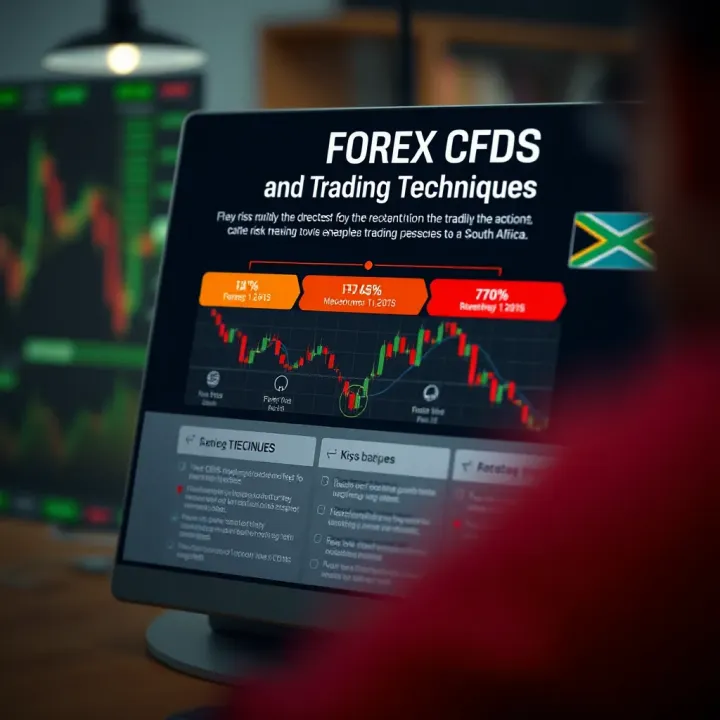
When selecting a broker, trustworthiness starts with clear regulatory status. Look for brokers registered with the FSCA who offer transparent terms and straightforward client agreements. Reliable brokers often provide strong client fund protection, such as keeping money in segregated accounts, which can shield your capital even if the broker faces financial difficulties.
Besides regulation, choosing a locally licensed broker simplifies compliance with South African laws and makes resolving disputes easier, thanks to local jurisdiction. For instance, many prominent brokers like IG, CM Trading, and Plus500 have FSCA licencing, which adds peace of mind.
Costs play a big role in your bottom line, so comparing spreads and fees is essential. Some brokers offer tight spreads on major currency pairs involving the rand (ZAR), which can make a noticeable difference over time. Beware of hidden fees such as inactivity penalties or withdrawal charges. Always read the fine print to understand the total cost of trading.
The key to success in South African Forex CFD trading lies in finding a well-regulated broker that offers fair pricing and robust security, while you stay compliant with local laws like FICA and RICA.
In summary, South Africa’s Forex CFD environment requires traders to be vigilant about compliance and broker selection. By focusing on firms with FSCA registration, adhering to identity verification requirements, and evaluating cost structures carefully, traders gain a solid foundation to trade confidently and securely.
Trading Forex CFDs in South Africa involves a keen awareness of the risks that come with market movements and the tools you use. Many traders focus on potential profits but overlooking the risks can quickly lead to significant losses. Being clear on what can go wrong, and having strategies to manage those risks, can make your trading more sustainable.
Leverage allows you to control a large position with a relatively small amount of capital. While this might sound like a handy shortcut to bigger profits, it works just as well in magnifying losses. For example, if you use 10:1 leverage and the market moves against you by 5%, your loss isn't just 5% of your invested capital but potentially 50%. In South African terms, that could mean a R1,000 investment turning into a R500 loss in no time.
The volatility of the rand (ZAR) against major currencies like the US dollar (USD) or the euro (EUR) is well-known. Events such as political developments, changes in commodity prices, or sudden Eskom loadshedding announcements have in the past led to swift rand fluctuations—sometimes moving 2% or more in a single day. This makes trading rand pairs risky but also presents opportunities for those who manage their exposure carefully.
One of the simplest but most effective tools to curb your downside is the stop loss. This function automatically closes your position once the price hits a predetermined level. For instance, if you buy USD/ZAR at 17.00 but want to limit losses, you might set a stop loss at 16.50. If the rand strengthens beyond that, your position closes to protect your capital. Using stop losses does not guarantee no loss, especially with sharp market gaps, but it adds a layer of protection.
Besides stops, position sizing is vital. It's tempting to go big, especially after a winning streak, but setting realistic exposure limits based on your total available trading capital helps you stay afloat during lean spells. A general guideline is risking no more than 1 to 2% of your account on a single trade. So, if you have R10,000, each trade should potentially lose you no more than R100 to R200 before your stop loss kicks in. This tactic keeps emotional decision-making at bay and helps maintain a level head.
Controlling risk isn’t about avoiding losses but about planning so that no single trade can knock you off your feet.
By understanding how leverage can bite back and by using tools like stop losses and sensible position sizing, you reduce the chance of a bad day wiping out your account. This practical approach goes a long way in building long-term success.
Getting your head around effective strategies is the backbone of successful Forex CFD trading. In a market as dynamic and fast-moving as Forex, relying on guesswork or luck won’t do. Traders in South Africa need to combine solid analysis, sound planning, and emotional control to navigate fluctuations, especially given the rand’s notorious volatility.
Monitoring economic data and monetary policies is crucial because Forex prices often reflect underlying economic health. For instance, if South Africa’s GDP figures or inflation rate come in stronger or weaker than expected, they can cause significant ripple effects in the ZAR exchange rates. Keeping an eye on these stats, released by Stats SA or the SARB (South African Reserve Bank), helps traders predict movements more accurately.
Monetary policies – especially interest rate decisions by central banks – directly affect currency values. When the SARB changes rates to curb inflation or stimulate growth, these moves shape trader expectations. Coupled with data, these policy changes give you a clearer picture of where the rand might be headed.
Impact of central bank decisions and geopolitical events stretches beyond routine economic reports. Central banks don’t just announce rates—they influence markets through forward guidance and policy statements. For example, if the SARB signals caution about rising inflation, the rand could strengthen as traders anticipate tighter policies. Meanwhile, global geopolitical tensions, such as trade disputes or conflicts, may shake confidence in emerging markets like South Africa.
Take Brexit or US-China trade relations – shifts in these arenas often trigger sudden rand volatility as investors seek safer havens. Awareness of these events helps you anticipate potential spikes or dips rather than being caught off guard.
Using chart patterns and indicators involves studying price movements visually to spot potential reversals or momentum. Patterns like head and shoulders or double bottoms can signal upcoming price shifts. Indicators such as moving averages or the Relative Strength Index (RSI) offer clues about trend strength or overbought conditions. Traders often combine these to build a trading edge.
For example, if the ZAR/USD pair breaks out of a resistance level with rising volume and an RSI below 70, it might indicate a continued uptrend, signalling a buying opportunity. Tools like MetaTrader, commonly used among South African traders, provide these indicators neatly integrated.
Identifying trends and entry points means recognising when a currency is on a sustained move and deciding the best moment to trade. Spotting an uptrend or a downtrend early allows you to position yourself ahead of the crowd.
Practical steps include drawing trendlines, watching moving average crossovers, and setting entry orders just above or below key levels. For instance, buying the rand when it bounces off a long-term support level could minimise risk and maximise reward. Knowing when to get in and out sharply impacts your bottom line.
Maintaining consistency in trading is about sticking to your strategy over time, no matter whether you’re winning or losing. Jumping between methods or doubling down emotionally on losing trades often destroys capital quickly. A disciplined approach means setting clear rules for when to open or close a position and following them.
Consider a South African trader who plans to risk no more than 1% of their account per trade and commits to that rule strictly—this keeps losses manageable amid rand swings.
Avoiding emotional decisions is arguably the hardest part. Fear and greed push traders to act impulsively—chasing losses or holding onto winners too long. Successful traders learn to detach emotions by using tools like stop losses, which set automatic exit points.
For example, after a sudden rand sell-off linked to unexpected political news, instead of panicking and selling everything, a calm trader revisits their plan and uses stop losses to manage downside without overreacting. Emotional control avoids unnecessary losses and preserves your trading discipline.
Staying ahead in Forex CFD trading depends on blending solid analysis with a steady mindset. The rand’s ups and downs demand not only good strategy but also patience and good judgement. Investing time in developing these skills can greatly improve your chances of consistent profits.
In practice, combining fundamental and technical analysis with sharp psychological discipline creates a well-rounded approach. This strategy mix suits South African traders well, given the local market quirks and the global shifts that regularly affect the rand.
Forex CFD trading in South Africa comes with its own set of challenges and opportunities. Practical tips that account for the unique local environment can help traders avoid common pitfalls while making the most of market conditions. These pointers are vital for managing risks linked to infrastructure issues such as loadshedding or data costs, and for strengthening trading skills without risking real capital.
South Africa’s frequent loadshedding affects internet connectivity and power availability — critical factors for Forex trading that relies on real-time data. Traders need to plan their trading activities around scheduled power outages announced by Eskom. For example, avoiding opening or closing positions during known loadshedding periods reduces exposure to price gaps caused by missed market signals.
Having a backup power supply like an inverter or UPS (uninterruptible power supply) can provide extra reliability, especially during peak market hours. Some traders also opt for mobile trading apps, which allow them to quickly check the market from a smartphone if their main workstation goes down.
Many South Africans rely on mobile data rather than fixed-line broadband due to affordability or convenience. Since Forex platforms feed off constant price updates, it’s wise to monitor data usage closely to control costs. Traders should consider using data-saving modes on trading apps or scheduling trades when connected to Wi-Fi.
Additionally, choosing brokers with lightweight platforms or optimised mobile apps can lower data consumption. For instance, an app that supports offline chart analysis helps traders prepare ahead without constantly using mobile data. Bundling mobile data plans from providers like Vodacom or MTN with flexible daily or weekly limits can also help keep expenses manageable.
Demo accounts simulate live market conditions without the risk of losing real money, giving traders space to test strategies and familiarise themselves with trading platforms. This safe environment is especially useful for South African traders new to Forex CFDs or those experimenting with leverage to understand how sizeable exposure affects profits and losses.
For example, practising setting stop losses or trailing stops on a demo account can build confidence before deploying them in live trades. Regular demo trading also helps sharpen reaction times to sudden market moves, a valuable skill given the volatility of currency pairs involving the rand.
South African traders can access quality Forex education from platforms such as MyBroadband forums, FSCA updates, and webinars hosted by accredited brokers operating locally like IG or Plus500. Local business news websites like Moneyweb often feature insights on forex market trends and regulatory changes affecting traders.
Joining local trading communities or attending virtual indabas (conferences) helps learners exchange ideas and stay updated on market developments and compliance requirements. Using content tailored to South African regulations and market practices ensures relevance and applicability.
Staying practical and grounded in your approach, considering local factors like loadshedding and data costs, plus committing time to demo practice and proper education, can really boost your chances of success in Forex CFD trading in South Africa.
📈 Explore signal trading for South African traders: learn how to pick reliable signals, balance pros and cons, and boost your market moves effectively.
Explore Olymp Trade's features, account types, and risks with our South African guide 📊. Get tips for beginners and understand the local trading rules 🇿🇦.
Explore QX Broker 🌍 for South African traders 🇿🇦 with detailed info on its services, platform features, accounts, fees, support, and trading tools 📊.

Explore how Ryze Prop Firm funds traders, its evaluation steps, and benefits for South African traders. Get practical tips to join and trade with confidence 🚀📈.
Based on 6 reviews