
How to Trade Cryptocurrency in South Africa
📈 Learn how to trade cryptocurrency safely in South Africa. Get tips on platforms, strategies, tax rules, managing volatility and data costs for smart trading.
Edited By
Charlotte Blake
Trading forex, or foreign exchange, means buying and selling currencies to profit from their fluctuating values. For South Africans keen to get a slice of this massive global market, understanding how to navigate the local environment is key.
South Africa’s forex landscape is shaped by regulations from the Financial Sector Conduct Authority (FSCA), which keeps brokers in line and safeguards traders. Choosing a broker registered with the FSCA is essential to ensure your funds are protected and you trade on a reliable platform.
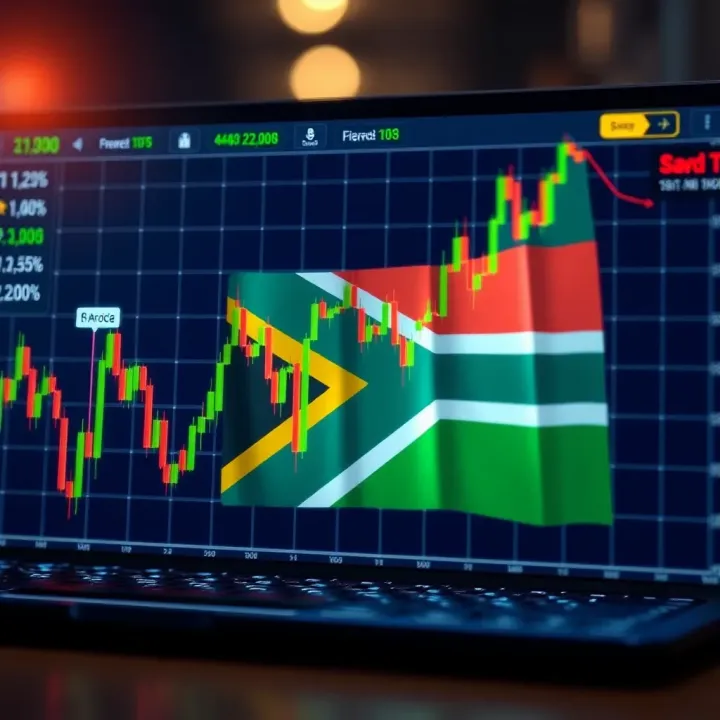
Forex trading involves pairs like USD/ZAR (the US dollar against the South African rand), which many local traders focus on. These pairs react to global economic events, but also to local factors such as Eskom’s loadshedding schedules or SARB’s interest rate announcements.
Starting out requires more than just opening a trading account. Understanding leverage, spreads, and margin calls protects you from big losses. For instance, while a broker might offer 1:100 leverage, using it blindly can wipe out your capital swiftly.
Remember: Forex trading isn’t about quick wins; it demands steady learning, patience, and discipline.
Practical tools like demo accounts help beginners practise without risking real money. Platforms like MetaTrader 4 or 5 are popular choices here, offering charting tools and automated trading options tailored to different strategies.
Local conditions also influence forex activity. Since data costs remain relatively high, many traders prefer lightweight mobile apps or use intermittent sessions on broadband to manage their trades efficiently.
In this guide, you’ll find advice on broker selection, understanding the legal side, managing risks, and utilising local market insights. Whether you’re testing the waters or sharpening your skills, having a clear, South Africa-focused roadmap can make all the difference.
Starting out in forex trading can feel like stepping into a fast-moving taxi during rush hour. That said, having a clear grasp of the basics will prevent you from being tossed about. Understanding the fundamentals and knowing what’s expected from South African traders sets the foundation for sensible, informed decision-making.
Forex trading revolves around buying and selling currency pairs—for example, the USD/ZAR pair reflects the exchange rate between the US Dollar and the South African Rand. You’re essentially betting on whether one currency will strengthen or weaken relative to another. Unlike the JSE share market, forex trades mostly happen over the counter (OTC), meaning you trade through brokers instead of a central exchange.
The forex market runs 24 hours a day during weekdays, starting from the Sydney session on Sunday evening SAST, moving through to Tokyo, London, and then New York. This constant movement means there are different times when the market is more or less active. For instance, the London and New York overlap (2 pm to 5 pm SAST) is typically where you find the most volume and tighter spreads, offering better opportunities but also higher volatility.
Forex stands out from other markets like stocks or bonds because of its liquidity and operating hours. The forex market is the biggest liquid market globally, with daily turnover above $6 trillion. This liquidity means you can enter or exit trades quickly without big price changes caused by your own transaction.
Additionally, forex trading uses leverage quite heavily — in South Africa, brokers regulated by the Financial Sector Conduct Authority (FSCA) generally offer leverage up to 1:200, but it’s a double-edged sword. While it boosts buying power, it also increases risk. In contrast, the JSE offers no leverage on the actual equities, which suits long-term investing rather than short-term speculation.
Starting forex trading doesn't require a fortune, but you shouldn’t believe you can turn a R500 deposit into riches overnight. Most reputable brokers in South Africa will allow you to open an account with as little as R1,000 to R5,000. However, effective trading needs more than just a minimum deposit; it needs enough capital to handle market swings and avoid being stopped out too easily.
For example, if you’re trading the USD/ZAR pair with a leverage of 1:100 using R2,000, a small adverse movement can wipe out your margin quickly. That’s why it’s often recommended to start with at least R10,000 if you want to build a solid foundation.
Forex trading isn’t a get-rich-quick scheme — it requires understanding economic fundamentals, currency behaviour, and technical analysis. Many South African traders benefit from spending time learning about charts, indicators, and market sentiment before delving into live trades.
Besides chart reading, you'll need to grasp risk management principles like setting stop losses and managing your exposure per trade. This knowledge helps prevent emotional trading decisions that often lead to losses. Using demo accounts offered by brokers such as IG or Plus500 allows you to practice without risking Rands, which is a sensible first step on the learning curve.
Remember, successful forex trading in South Africa starts with proper preparation: learn the basics, be realistic about capital, and trade with discipline to protect your money.
Picking a forex broker with proper regulation in South Africa is more than just ticking a box — it protects your money and trading experience. Given the risks in forex markets, having a broker overseen by local authorities ensures some level of accountability and safety. This is especially relevant in South Africa, where the Financial Sector Conduct Authority (FSCA) plays a watchdog role to keep things on the straight and narrow.
The Financial Sector Conduct Authority (FSCA) is the key government body regulating financial services, including forex brokers, in South Africa. It replaced the Financial Services Board (FSB) to better supervise the market and protect consumers. When a broker is FSCA-registered, it means the company meets certain standards in transparency, financial stability, and ethical conduct. For example, FSCA-regulated brokers must separate client funds from operational capital, which reduces the risk of losing your money if the broker faces technical or financial trouble.
For South African traders, dealing with an FSCA-regulated broker means you have legal recourse if anything goes wrong. The FSCA can investigate complaints and enforce penalties. This is critical because the world of forex has its share of unscrupulous operators. So, dealing with a local, regulated firm helps you avoid getting caught up in scams or firms that simply vanish with clients’ deposits.
Regulation isn’t just about safety — it affects the quality of your trading too. Regulated brokers must adhere to rules around how they execute trades, report prices, and handle client data. This translates to fairer and more transparent conditions for you. In contrast, brokers without regulation or with offshore registration might offer tempting leverage or bonuses but often with hidden risks or shady practices.
Since forex trading is fast-moving, having a broker under South African regulatory supervision means you are dealing with someone accountable in the same legal environment, not thousands of kilometres away or offshore entities with limited oversight. This alignment generally improves communication, dispute resolution, and trust.
The trading platform is your workspace, so picking the right one matters. Popular platforms like MetaTrader 4 and 5, and sometimes proprietary software, are common in South Africa. These platforms offer robust charting, automated trading options, and access to different currency pairs. For example, a platform that lets you customise indicators and backtest strategies can give you an edge.
While some traders might be tempted by flashy platforms, it’s better to prioritise usability and reliability. If your platform freezes in the middle of a trade during a volatile market, you could lose out. Also, check if the broker offers mobile apps allowing you to trade on the go without hiccups.
Costs come in many forms — not just in spreads but also commissions and overnight fees. Brokers regulated in South Africa usually provide transparent fee structures, so you’re not blindsided. For instance, a spread on the EUR/USD pair of around 1 to 2 pips is typical for retail brokers here; wider spreads or hidden commissions should raise flags.
Watch out for fees that add up quickly, especially if you trade frequently. An MT4 broker with low spreads but a high overnight fee might cost more overall. Comparing fee structures across brokers can save you serious Rands in the long run.
Dealing with a broker that offers local support can make all the difference. South African traders benefit from customer service that operates in their time zone and understands local challenges, like interpreting FSCA regulations or handling issues related to local banking systems.
Moreover, educational resources are a sign of a broker invested in your success. Look for brokers that provide tutorials, webinars, and market analysis tailored for South African market conditions. This helps especially if you’re new to forex trading.
Choosing a well-regulated broker with strong features reduces unnecessary risks and smooths your trading journey. This way, you spend your time growing your trading skills, not chasing unclear policies or dealing with dodgy platforms.
Mastering trading strategies and using the right tools is key for anyone trading forex in South Africa. Without clear strategies, you’re just guessing, and without solid tools, you could miss important market movements. Both elements work together to help you make informed decisions and manage your risk efficiently.
Trend following and breakout strategies are simple yet effective approaches for new traders. Trend following involves identifying the direction of the market—whether it’s moving up, down, or sideways—and entering trades that align with that movement. For example, if the USD/ZAR pair is steadily climbing, a trend follower would look to ‘buy’ or go long, aiming to ride the wave until signs of reversal appear.
Breakout strategies focus on price levels where the market has previously stalled, known as support and resistance. When the price breaks through these levels, it often signals a strong move ahead. Say the EUR/ZAR has been stuck below R20 for days; a break above that can indicate the start of an uptrend. These strategies are practical because they use clear, observable patterns and are easy to combine with stop-loss orders for risk control.
Using technical indicators effectively means relying on tools like moving averages, relative strength index (RSI), or Bollinger Bands to understand market momentum and potential points of entry or exit. For instance, the RSI helps spot overbought or oversold conditions, so you might avoid buying when the RSI crosses above 70, signalling the currency is too ‘hot’ and might drop soon.
However, it’s important not to overload your charts with too many indicators. Instead, focus on one or two that suit your strategy and trading style. Think of indicators as your trading glasses; clear ones will improve your vision, but cluttered lenses only confuse.
Popular platforms among South African traders include MetaTrader 4 and 5, and TradingView. MetaTrader is widely used because it offers automated trading options, a range of technical indicators, and customisable charting. TradingView, meanwhile, is well-loved for its user-friendly interface and strong community features where users share trading ideas. These platforms provide essential real-time data and help you execute trades quickly, which is crucial in the always-moving forex market.
How to interpret technical charts is fundamental. Charts reveal patterns like head and shoulders, double tops/bottoms, and channels, which predict potential price moves. For instance, if the GBP/USD forms a ‘double bottom’ pattern on the daily chart, this often signals a strong support area and possible price increase. Learning to read volume alongside price movements can also confirm how strong these signals are.
Understanding chart patterns and indicators helps you stay one step ahead in forex trading. It’s like reading the market’s mood — giving you a better chance to decide when to jump in or sit out.
Combining these strategies, indicators and charting tools can help South African traders build a more disciplined and informed approach, increasing the chances of long-term success while managing risks appropriately.
Managing risk properly is one of the most overlooked yet vital parts of trading forex successfully. Without strong risk controls, even a few bad trades can wipe out your capital quickly. South African traders especially face local market quirks like sudden rand volatility or unexpected news from SARB, making risk management essential to staying afloat.
Protecting your capital and avoiding emotionally driven mistakes can extend your trading career and improve consistency.
A stop loss order acts like a safety net, automatically closing your position once the price hits a certain level you decide on beforehand. This helps prevent losses from spiralling when the market moves against you. For example, if you enter a trade on the USD/ZAR expecting it to rise but the rand suddenly strengthens, the stop loss limits how much you lose — preserving funds to trade again rather than letting one trade drain your account.
Using stop losses also removes the need to constantly watch the markets, which is handy when loadshedding or other personal interruptions arise. If you skipped this step, a trade could go sour overnight without your knowledge, causing bigger headaches.
Take profit orders lock in gains by closing a trade when it reaches a set price target. Deciding where to place these depends on your trading strategy, market volatility, and realistic risk-to-reward ratios. For instance, if you set a stop loss 50 pips away, you might aim for a take profit 100 pips away to ensure a positive risk/reward balance.
It’s tempting to hold out for maximum profits, but that often backfires. Setting clear take profit points enforces discipline and helps you rake in steady returns rather than chasing unrealistic outcomes. Always base these on actual price action and technical levels rather than gut feel.
Traders often fall into the trap of overtrading when they let emotions like fear, greed, or frustration drive decisions. You might catch yourself placing trades outside your plan, increasing position sizes to "make up" losses, or ignoring stop losses simply because “this time it’ll work.”
This emotional behaviour usually results in poor choices and bigger losses. An example would be doubling your trade size after a losing streak, hoping to recover quickly, but instead blowing your entire account. The market won’t cut you slack simply because you’re stressed.
To avoid overtrading, stick strictly to your trading plan. Predefine your daily loss limits, number of trades, and risk per trade. Pausing trading after a losing session gives you time to reset mentally.
Many successful South African traders keep journals recording why trades were entered or exited — this builds awareness about emotional impulses. Over time, maintaining discipline becomes second nature, helping you weather tough patches without poor decisions.
Even with just a small trading account, consistent application of risk management and emotional control can take you far. Remember, forex trading is not a sprint but a marathon.
Understanding the legal and tax framework is vital for anyone trading forex in South Africa. Compliance not only helps avoid penalties but also ensures your trading activities remain transparent and above board. Knowing the rules set by national authorities like the South African Reserve Bank (SARB) and the South African Revenue Service (SARS) will allow you to trade confidently and manage your profits effectively.
South African law permits residents to participate in forex trading, but there are boundaries to what is allowed. The Financial Sector Conduct Authority (FSCA) regulates financial service providers to ensure fair play, so always choose brokers authorised by the FSCA. While you can trade foreign currencies on licensed platforms, unregulated entities operating within South Africa are not lawful, and trading with them can expose you to financial risk and possible legal issues.
The SARB also keeps a close eye on forex trading due to foreign currency controls in South Africa. Traders must ensure that all currency transactions comply with SARB’s Exchange Control Regulations. For example, offshore trading accounts need approval and must be funded through authorised dealers like banks or authorised foreign exchange brokers. Ignoring these rules can lead to penalties or confiscation of funds.
Compliance with SARB regulations helps prevent illegal capital flight and supports the country’s economic stability.
When it comes to reporting, SARB requires traders to declare forex exposures when requested and supply details about foreign currency inflows and outflows. This is mainly relevant if you transfer large sums across borders. By keeping records of transactions and transfers, you ensure smoother audits and avoid red flags.
Forex trading profits are judged differently depending on the nature of the trading activity. If forex trading is a hobby or an occasional activity, profits are generally considered capital gains and taxed accordingly. For example, selling a currency position after a few months with profit falls under capital gains tax (CGT). CGT applies to 40% of your net capital gain added to your taxable income at your marginal rate.
However, if trading is your primary business or done regularly with the intent to profit, SARS treats those profits as income tax. That means your forex earnings form part of your normal taxable income and taxed according to your income bracket. So, a full-time trader engaging daily would fall into this category and must declare all forex profits as income.
Keeping detailed and accurate records is crucial. SARS requires traders to maintain:
Statements of all trades and transactions
Bank statements showing deposits and withdrawals
Documentation of expenses related to trading (such as platform fees)
Good record-keeping can simplify tax submissions and protect you in case of an audit. You should keep these documents for at least five years, which is the typical SARS audit period.
In summary, understanding what is legal and how the tax system treats your forex profits can save you trouble later. Regularly reviewing your compliance status and tax obligations as a South African forex trader will place you on solid ground to grow your trading activities safely and smartly.
📈 Learn how to trade cryptocurrency safely in South Africa. Get tips on platforms, strategies, tax rules, managing volatility and data costs for smart trading.
Curious about FX trading? 🌍 Learn how currency markets work, key strategies, risks, and how South Africans can confidently trade forex while protecting their investments.
📊 Learn the essentials of forex trading with practical classes in South Africa. Discover course types, key skills and tips to improve your currency trading confidently.
📈 Discover how to trade the Step Index in South Africa with practical tips on platforms, strategies, risk, costs & regs for confident volatility trading.
Based on 5 reviews