
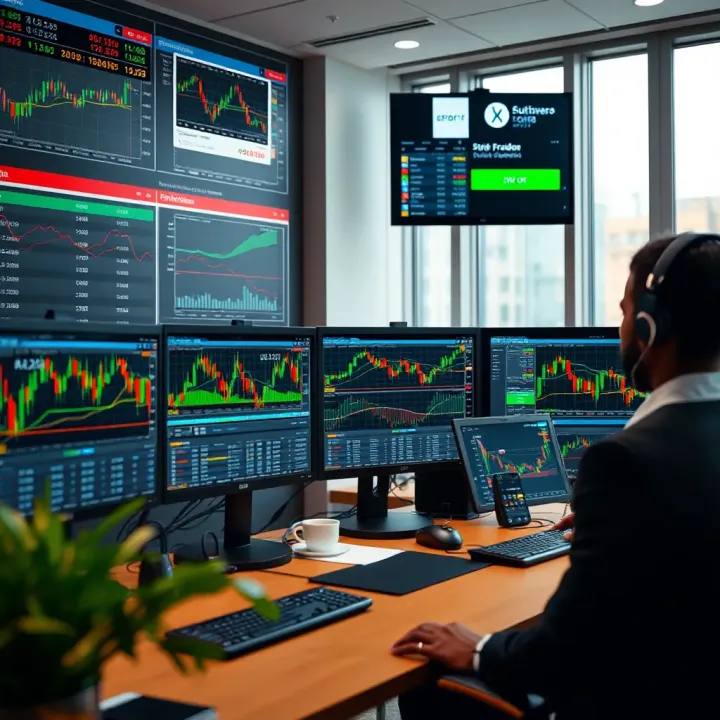
Inside Wealthy Forex Traders in South Africa
Explore how wealthy forex traders in South Africa build and safeguard wealth 💰, tackle local market challenges 📉, and use smart strategies 📈.
Edited By
Oliver Matthews
Forex trading has become an increasingly popular venture in South Africa, attracting traders at various levels who want to tap into the global currency market. But jumping in without a solid grounding can be risky — that’s why many turn to forex classes for a structured learning experience. These classes provide practical, hands-on training to help you understand how currency pairs move, what influences exchange rates, and how to manage trades effectively.
South African traders face unique challenges such as volatility influenced by local economic events, exchange controls, and the impact of Eskom’s loadshedding on online trading platforms. Forex classes here often tailor lessons to these realities, making them more relevant than general global courses.

Understanding the nuts and bolts of forex trading is the first step towards trading with confidence. Well-designed classes offer more than just theory — they focus on actionable skills, from reading price charts to managing risk properly.
Most forex classes cover core concepts like:
The basics of currency pairs, pips, and lot sizes
How economic indicators affect currencies (e.g., SARB interest rate announcements)
Technical analysis tools such as moving averages or Fibonacci retracements
Trading psychology and discipline
You’ll find a range of course options available locally and online. Some cater to beginners, breaking down forex jargon into plain English, while others assume a background in finance and dive deeper into strategies and algorithmic trading.
Choosing the right class means considering your current level, learning style, and your goals — whether that’s day trading, swing trading, or hedging forex exposure for your business. Plus, it’s worth checking the credibility of the provider, reviews from past attendees, and if they offer ongoing support or mentorship.
Ultimately, forex classes in South Africa are about building a foundation that helps you avoid common pitfalls and steadily grow your trading skills. Keep in mind, no class alone will guarantee profits; consistent practice and continuous learning are key to long-term success.
Getting a proper grasp of forex trading is key for anyone looking to step into this fast-moving market. Unlike stocks or bonds, forex trading involves swapping one currency for another, based on their relative values. This exchange reflects everything from economic stats to political shifts, and it’s what keeps global commerce ticking. Understanding its appeal means recognising it’s not just about profit but also about these economic signals playing out in real time.
Basics of currency exchange: At its core, forex trading is simply exchanging one currency for another—say, swapping South African rand (ZAR) for the US dollar (USD). Every currency pair reflects a relationship; if the rand weakens against the dollar, it costs more rand to buy a dollar. Traders watch this closely since even small shifts can translate into sizeable gains or losses. For instance, a local importer might hedge by buying dollars if they expect the rand to drop.
How the forex market operates globally: Unlike a stock market with fixed trading hours, the forex market runs 24 hours a day during weekdays. Transactions flow continuously across hubs in London, New York, Tokyo, and Sydney, overlapping at times. This means you can trade any time—from early morning in Cape Town to late at night. The market’s size is massive, with daily turnover hitting around $7 trillion globally, so liquidity is usually high. This global nature provides diverse opportunities but demands timely decision-making.
Importance for South African traders: For local traders, forex offers a front-row seat to global economic trends that influence our rand and purchasing power. South Africa’s reliance on exports like minerals means currency swings can impact earnings. Moreover, forex trading can supplement income or provide a side hustle during loadshedding hours, especially using online platforms accessible via your smartphone. It’s a way to engage with markets beyond the JSE, spreading financial risk.
Potential benefits and risks: Forex trading tempts with the potential to profit from both rising and falling currencies. Leverage amplifies this, allowing traders to control bigger positions with a smaller investment. That said, this magnifies risk—you can lose more than your initial stake. Volatile markets, sudden news events (like SARB’s interest rate shifts), or geopolitical tensions can trigger sharp moves. Any serious learner must balance ambition with careful risk management.
Forex isn’t a guaranteed payday; it demands discipline, quick thinking, and thorough learning.
Accessibility through online platforms: These days, you don’t need to be in Johannesburg’s financial district to start trading. Platforms such as EasyEquities and IG Markets offer user-friendly access, tutorials, and demo accounts. This lowers barriers, letting you practise without risking real money. Plus, mobile apps let you check markets during your commute or even while at the local café.
Common motivations for South African learners: Many start forex classes aiming to supplement income or develop skills for a financial career. Others seek independence from traditional employment or want to diversify investment portfolios, especially given the rand’s volatility against the dollar or euro. Some are simply curious about the global economy and how currencies interact. Understanding these varied goals helps tailor learning and manage expectations effectively.
Understanding forex trading’s core and what draws people to it is the first step toward making informed decisions, be it entering classes or trying out trades slowly. As you proceed, remember that clarity and knowledge pay off better than quick guesses.
Forex classes play a key role in equipping South African traders with the knowledge they need to navigate the currency market. Understanding exactly what these courses cover helps learners pick the right class and know which skills they’ll gain. From basic currency concepts to managing risk and mastering trading psychology, classes focus on practical areas that directly affect trading outcomes.
Understanding currency pairs and pips is the starting point for any forex course. A currency pair like USD/ZAR represents the exchange rate between two currencies, showing how many South African Rand one US Dollar can buy. Traders need to grasp pips, the smallest movement in this exchange rate, as profit and loss calculations depend on it. For instance, if the USD/ZAR pair moves from 18.5000 to 18.5100, that’s a 100-pip shift, which directly influences trade results.
Reading charts and market indicators teaches learners how to interpret price movements and predict trends. Charts display historical price data, allowing traders to spot patterns like head-and-shoulders or flags, which signal potential reversals or continuations. Indicators such as moving averages or the Relative Strength Index (RSI) add another layer, helping traders judge momentum and possible entry or exit points. For example, a trader spotting oversold conditions on the RSI might consider buying the currency pair before a bounce.
Introduction to leverage and margin explains how traders can control larger positions with a smaller amount of money. Leverage amplifies gains but increases losses too, so understanding it is critical. A typical leverage ratio might be 1:100, meaning a R1,000 margin controls R100,000 worth of currency. Forex classes emphasise careful margin use to avoid substantial losses, a lesson especially relevant for South African traders using platforms offering high leverage.

Basic technical analysis techniques help traders read past price action to forecast future moves. This includes trend lines, support and resistance levels, and candlestick patterns. For example, spotting a double bottom on a chart might encourage a trader to buy, anticipating a price increase. These skills give South African learners a hands-on toolkit rather than relying solely on guesswork.
How economic data affects currency values covers the link between numbers like interest rates, inflation, or employment figures and forex prices. If South Africa’s Reserve Bank raises interest rates, it often strengthens the rand because higher rates attract investors. Forex classes teach how to track key releases and understand their impact, giving traders an edge in timing entries.
Using news and events in trading decisions expands on how political developments or unexpected announcements can trigger sharp market swings. For instance, load-shedding announcements from Eskom could affect the rand's performance. Learners get practical guidance on reacting quickly and avoiding emotional decisions during volatile periods.
Setting stop-loss and take-profit levels is a fundamental risk control technique. A stop-loss limits potential losses by automatically closing a trade at a set price, while take-profit secures gains at a preferred level. Forex classes demonstrate how to balance these levels to protect capital without cutting winners short.
Managing emotions and discipline addresses the psychological side of trading often overlooked by beginners. Fear or greed can lead to impulsive decisions that erode profits. Classes share methods like journalling trades, sticking to a plan, and recognising behavioural traps, which build resilience and consistency.
Common mistakes and how classes address them cover pitfalls like overtrading, chasing the market, or neglecting analysis. By highlighting real-life examples and encouraging practice on demo accounts, courses help learners avoid costly errors early on.
Solid forex education blends practical skills with an understanding of market forces and self-control. South African traders who invest time in these key learning areas are better poised to make sound decisions and manage their risks sensibly.
When starting out in foreign exchange trading, choosing the right learning path is as important as the content itself. South African traders have access to a variety of forex classes, each suited to different needs, schedules, and budgets. Understanding the types available helps in making a well-informed choice rather than simply picking the first option that pops up.
South Africa offers several in-person forex courses, typically held in major centres like Johannesburg, Cape Town, and Durban. These courses often run over weekends or evenings to accommodate working professionals. A standard course structure would include classroom lessons, live trading simulations, and group discussions. Familiarity with local market conditions can be expected, providing context that online platforms sometimes lack.
Face-to-face learning benefits traders by enabling immediate interaction with instructors and peers. This direct engagement helps in clearing doubts on the spot and fosters a supportive learning environment. It's easier to gauge nuances like body language or emphasis during explanations, which often improve comprehension—not something virtual lessons always deliver.
Costs vary but generally range from R3,000 to R7,000 for comprehensive workshops lasting a few days. Time commitments can be significant, especially if courses run for multiple sessions. However, many find the structured approach and personal attention worth the investment, particularly if they’re serious about pursuing trading professionally.
Online courses are increasingly popular in South Africa due to their accessibility. Platforms such as Udemy, Coursera, and dedicated local providers offer formats including video lessons, live webinars, and interactive quizzes. These courses allow learners to pause, revise, and schedule sessions at their convenience.
This flexibility is a real boon for professionals balancing work and family commitments. You can complete training modules after hours or on weekends without the need for travel. Plus, the availability of recorded sessions means you can revisit complex topics as needed.
That said, not all online courses are equally reliable. Checking the instructor’s credentials, course reviews, and the relevance of content to South African market conditions is essential. Look for indicators like practical trading exercises and community support forums, which often point to more credible offerings.
Free forex resources abound online—blog posts, YouTube tutorials, and basic courses by brokers. They’re good for getting a taste of trading concepts without financial risk. Still, these materials may lack depth and often miss out on structured guidance or personalised feedback.
Paid courses typically dive deeper, covering advanced strategies, risk management, and psychology alongside fundamental trading skills. You also get access to experienced trainers and sometimes ongoing mentorship or community groups. For those looking to trade seriously, investing in a quality paid course usually pays off.
When searching for reputable providers, consider organisations known for financial training in South Africa, or courses endorsed by recognised traders. Word of mouth and online reviews from local trading communities can be invaluable. Avoid any course promising quick riches or unrealistic guarantees, a red flag seen all too often in the market.
Choosing the right forex class depends on your learning style, schedule, and budget. Whether through in-person engagement or flexible online training, it’s about finding a course that offers practical, credible knowledge suited to South African traders’ realities.
Selecting the right forex class can make a big difference in how effectively you absorb trading knowledge and apply it. Instead of just picking the cheapest or most popular option, consider your personal situation and what you want to get out of the course. The right class will align with your skill level, trading style, available time, and the kind of support you’ll need.
First, think about your current experience with forex. Courses come in several levels: beginner, intermediate and advanced. For instance, if you’re just starting in forex trading, a beginner class will introduce basics like currency pairs, pips, and market structure. Jumping into an advanced course without foundation knowledge is like trying to drive in Cape Town’s CBD without a licence—it’s risky and confusing.
Next, consider your trading style. Are you interested in day trading, swing trading, or long-term position holding? Different classes focus on various strategies. A course that emphasizes scalping techniques might not suit you if you prefer slower, more deliberate trades based on fundamental South African economic data.
Time and resource availability also matters. Classes range from brief weekend workshops to months-long online programmes. If you work full-time in Johannesburg, a flexible online course that you can access after hours might suit you best. On the other hand, if you can commit daytime hours, an in-person workshop in Cape Town might offer better interaction and feedback.
Look out for hands-on practice and simulations. Trading is skill-based, so a course that offers live trading simulations helps you get real feel without risking actual money. For example, a good online course should include access to demo accounts or virtual trading platforms tailored to South African rand pairs.
Access to trainers and support is another important factor. Some courses only provide prerecorded lessons. But having trainers available for questions or joining live sessions can clear up confusion quickly. Courses linked to local trading communities or mentorship groups add extra value.
It also helps if the course uses local market examples. South African currency pairs (like ZAR/USD), interest rate decisions by the South African Reserve Bank (SARB), and regional economic news influence forex trading differently than international markets. Courses that bring local context into lessons make the learning more relevant and effective.
Researching feedback from former students tells you what to expect on the ground. Look for honest reviews that mention teaching style, course updates, and practical outcomes. Avoid basing decisions solely on star ratings—read what people specifically say about how well the course prepared them.
Checking the instructors’ backgrounds is also key. Good forex teachers usually have real trading experience and credible qualifications rather than just being course marketers. Knowing if an instructor understands South African market conditions can be a bonus.
Finally, accreditation and certifications offer some assurance, although forex education isn’t heavily regulated locally. Courses certified by recognised bodies or with reputable local partnerships lend credibility and can be useful if you want formal recognition of your training.
Choose a course that fits your level, supports your trading strategy, and offers solid guidance with local flavour—this will give you the best shot at becoming a confident trader.
Once you've grasped the basics of forex trading, moving to advanced classes can really sharpen your edge. These classes go beyond simple concepts, introducing sophisticated strategies and tools that seasoned traders use. This step can mean the difference between dabbling and trading seriously—especially when navigating volatile markets like those South Africans face daily due to local and global economic shifts.
Many advanced forex classes introduce the concept of algorithmic trading—this is where computers execute trades based on pre-set rules, like price thresholds or technical signals. For example, a local trader might program an algorithm to open positions when the rand hits certain levels against the dollar, reacting faster than manual trading allows. Learning the basics helps traders understand how to set criteria for automated systems, making trading more consistent and less prone to emotional errors.
Advanced courses often cover indicators beyond the simple moving averages, such as Fibonacci retracements, Ichimoku clouds, or Elliott Wave theory. These tools help spot deeper market patterns and possible trend reversals more precisely. For instance, a trader watching the EUR/ZAR pair can use these indicators to forecast pullbacks or price surges with greater confidence, improving entry and exit timing.
Proper portfolio and money management distinguishes successful traders from those who burn cash quickly. Advanced classes teach how to allocate risk among various currency pairs and manage leverage carefully to protect capital. For example, limiting exposure to a maximum of 2% of your total trading funds on a single transaction can prevent devastating losses during unexpected market moves.
Learning doesn't stop when class ends. Engaging with local trading groups or online forums offers ongoing support and fresh perspectives. South African traders often join WhatsApp groups or platforms like MyBroadband forums to swap insights about rand volatility and global market events. This network helps you stay informed and avoid common pitfalls.
Forex markets shift constantly, so staying current with regular updates is crucial. Some platforms provide daily or weekly market analyses, sometimes free of charge, that explain recent moves and upcoming events. Refresher courses also help traders revisit key concepts to sharpen skills, especially after periods off trading due to factors like Eskom's loadshedding disrupting normal routines.
Mentorship can accelerate your growth, offering personalised feedback and guidance. In South Africa, several forex educators and brokers provide mentorship schemes or private coaching. Pairing up with a peer trader also encourages practice and accountability, creating a learning environment that boosts confidence and keeps motivation high.
Taking forex classes beyond the basics equips you with the tools and community to trade smarter, not just harder. With patience and ongoing learning, this deeper knowledge helps you adapt to changing markets and build a more resilient trading strategy.
Explore how wealthy forex traders in South Africa build and safeguard wealth 💰, tackle local market challenges 📉, and use smart strategies 📈.

📈 Get a deep dive into Tesla shares for South African investors. Learn how to buy, track stock trends, spot risks, and make informed choices in 2024.
🔐 Step-by-step guide for South African traders to login to Quotex: create accounts, fix login issues, secure profiles, and enhance trading success. 📈
Discover how to navigate and manage your RoboForex Members Area 🖥️. Get tips tailored for South African traders 🇿🇦 to maximise your trading potential 📈.
Based on 10 reviews