
Understanding Free Trading Bots in South Africa
🤖 Learn how free trading bots work, their benefits and risks, plus practical tips for South African traders to automate trades safely and effectively with no upfront cost.
Edited By
Isabella Morgan
Free margin plays a vital role in how traders manage their accounts and risk, especially when dealing with leveraged products like forex and CFDs (contracts for difference). In simple terms, free margin is the amount of money in your trading account that’s available to open new positions or to withstand losses on your existing trades. It’s the difference between your equity (total account value including unrealised profits or losses) and the margin currently in use for open trades.
Understanding free margin helps traders avoid the dreaded margin call, which happens when the available funds dip too low for the broker to keep positions open. In South Africa’s trading scene, where forex popularity is strong and leverage levels vary among brokers, knowing your free margin can prevent unnecessary liquidations during volatile phases or loadshedding-related market jitters.
Key takeaway: Free margin reflects your breathing room in the market. It shows how much you can risk without triggering forced closures.
Your trading account has three main components:
Balance: The money you have deposited, excluding any open trade profits or losses.
Equity: The current value of your account including all open positions (Balance ± floating P/L).
Margin: The amount locked to keep your current trades open.
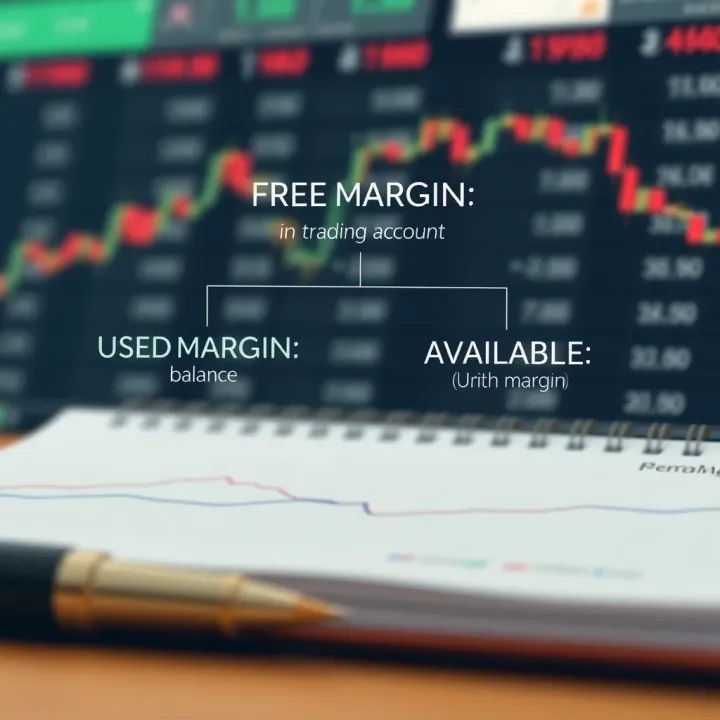
Free margin = Equity − Margin used
For example, if you deposited R10,000, have open trades using R2,000 margin, and your equity now stands at R9,500 due to an unrealised loss, your free margin is R9,500 − R2,000 = R7,500. This R7,500 is what you can use for new trades.
Avoiding overexposure: If your free margin falls below a certain threshold, opening new trades becomes risky. Many brokers set margin call levels at 50% or 100%, where positions may be liquidated if the free margin dips too low.
Position sizing: Understanding free margin helps determine how big your trades can be. It’s tempting to go in heavy, but erring on the conservative side reduces blowouts.
Traders in South Africa often face pressure from exchange rate swings, volatile commodities, or local news impacting the rand. Monitoring free margin provides a cushion against these market surprises.
To recap, free margin isn’t just a number on your platform — it’s a vital signal for your account’s health and your ability to trade without sudden shocks.
Understanding free margin is essential for anyone trading forex or contracts for difference (CFDs). Free margin represents the funds in your trading account that remain after the margin used for current open positions is deducted. In practical terms, it shows how much second chance capital you have available to open more trades or withstand adverse price movements.
The margin is the initial amount set aside to open a position, sometimes called the "used margin." For example, if you open a R10,000 position with 10:1 leverage, you need to provide R1,000 as margin. This is money locked to maintain your trade.
Your equity is the overall value of your trading account — it’s the balance plus or minus any profits or losses on open trades. Equity fluctuates with the market value of your positions, while margin usually stays fixed for each open trade.
Free margin is what remains unused from your equity after accounting for the used margin. If your equity is R15,000 and your margin locked in trades is R5,000, your free margin is R10,000. This free margin can be thought of as your safety net or working capital within the trading account.
It’s critical because if the market moves against you and your equity falls close to the used margin, your free margin shrinks. This affects your ability to keep trades open or enter new ones.
The basic formula for free margin is:
Free Margin = Equity – Used Margin
This straightforward equation allows traders to see at a glance how much room they have for manoeuvre. For example, if your account balance is R20,000 with no open trades, your equity and free margin are both R20,000. Once you open trades that need a margin of R4,000, assuming no profit or loss yet, your free margin drops to R16,000.

#### Examples Using Typical Trading Accounts

Consider a trader in Johannesburg with a [forex](/articles/understanding-forex-trading-robots-guide/) account funded with R50,000. She opens multiple positions that require R20,000 margin. Her equity climbs to R55,000 after some profitable trades, so her free margin equals R55,000 minus R20,000, or R35,000. She can safely open additional trades with this free margin but must keep an eye on market moves that might deplete it.

In contrast, a trader with R10,000 equity and R9,000 used margin only has R1,000 free margin. This skews his risk profile and limits new trades.

#### Impact of Open Positions on Free Margin

Each open position demands a portion of your margin. The larger or more leveraged your positions, the more margin you use. Any unrealised losses lower your equity and thus reduce your free margin.

For instance, if a position weakens resulting in R3,000 lost, equity drops. This reduction eats into your free margin and raises the risk of margin calls or stop-outs by your broker.

> **To keep trading safely, always monitor free margin closely—it’s your buffer against sudden market swings and helps you manage risk effectively.**

Keeping track of free margin helps you avoid surprises and maintain control over your trading activities, especially in volatile markets like the South [African](/articles/understanding-forex-trading-south-africa/) rand against the US dollar or during hectic sessions on the JSE.

## The Role of Free Margin in Risk Management

Free margin plays a critical role in managing risk when trading forex or CFDs. It acts as a buffer that helps traders withstand price swings without hitting margin calls or stop outs, which can wipe out an account quickly. Understanding this buffer and how to keep it healthy can prevent sudden account closures and allow more room for opportunities.

### Using Free Margin to Avoid Margin Calls and Stop Outs

A margin call occurs when a trader's free margin drops below the broker’s minimum maintenance margin level, signalling the account no longer has enough funds to support open positions. If ignored, it can escalate to a stop out, where the broker automatically closes losing trades to protect both parties. Think of it as your broker flashing a red light: too little free margin means the broker has to step in for risk control.

Low free margin clearly signals danger because it reflects increased exposure combined with shrinking equity. For example, a trader with R10,000 equity and used margin of R9,500 only has R500 free margin left. If the market moves further against open positions, that R500 buffer might vanish quickly, triggering margin calls or forced liquidations.

Managing trade sizes responsibly helps maintain a healthy free margin. Instead of piling on large positions, traders should size their trades so that even with adverse movements, free margin doesn't fall close to zero. For instance, opening smaller CFD positions or reducing leverage lowers used margin, preserving a cushion for market fluctuations.

### Practical Steps to Monitor and Protect Free Margin

Modern trading platforms like MetaTrader 4 or 5, and some local brokers’ interfaces, show free margin prominently alongside equity and used margin. These indicators give real-time snapshots, helping traders keep tabs on available funds without guessing.

Setting up alerts can be a lifesaver. Many brokers allow notifications when free margin falls below preset thresholds. This instant heads-up enables timely actions like closing some positions or adding funds before margin calls occur.

Adjusting leverage and position size goes hand in hand with managing free margin. Lowering leverage reduces the margin required per trade, freeing up capital within your account. For South African traders, this approach is practical, especially given occasional market swings and the impact of factors like loadshedding on trade monitoring. Starting with low to moderate leverage, say 10:1 or 20:1, can keep risk manageable.

> Taking control of free margin means actively balancing your account's exposure, not just hoping markets will stay kind.

Ultimately, good risk management involves respecting free margin limits, monitoring them constantly, and adjusting trades accordingly to stay in the game, even when the market isn't playing fair.

## Free Margin in Different Trading Scenarios

Free margin plays a vital role in how traders manage their accounts, especially when the market is unpredictable or when multiple positions are open. Understanding how free margin shifts in different scenarios can help you avoid unnecessary risks and seize trading opportunities responsibly.

### How Market Fluctuations Affect Free Margin

Price movements directly impact the margin requirements for open positions, which in turn affects your free margin. When the market moves against your trade, the equity decreases, reducing the free margin available to open or maintain other positions. For example, if you’re trading a volatile currency pair like USD/ZAR, a sudden 2% drop could tighten your margin buffer significantly if the trade size is large.

In highly volatile markets, margin usage can spike unexpectedly. Consider the 2020 market swings triggered by global events; traders holding sizeable positions without adequate free margin found themselves close to margin calls. This shows why keeping an eye on free margin during turbulent times is not just a good practice — it’s essential.

In the South African context, the USD/ZAR pair and commodities markets can be particularly volatile due to political and economic news, such as SARB rate decisions or Eskom loadshedding announcements. These cause swift price changes that affect margin requirements, so local traders should adjust their free margin calculations accordingly.

### Using Free Margin for Opening New Trades

Before opening a new trade, checking your available free margin is crucial. This tells you how much you can safely put on the line without risking a margin call. Opening a new position without adequate free margin can lead to forced closure of other trades or worse, stop outs.

When you have multiple trades running at once, balancing risk involves monitoring free margin continuously. For instance, if one trade turns against you, it will eat into your free margin, jeopardising other positions. It's wise to scale back sizes or close riskier trades to keep a healthy buffer.

Free margin also influences your leverage choices. Higher leverage magnifies both potential profits and losses, demanding more cautious margin management. South African brokers often have specific leverage limits, and sticking to these avoids being caught off guard by margin pressures.

> Keeping a steady eye on free margin across different trading scenarios helps you stay afloat when markets swing and lets you take calculated risks without overextending yourself.

## Common Mistakes and Misunderstandings About Free Margin

Recognising common mistakes around free margin can save traders from costly errors. Free margin isn’t just a number on your trading platform; it's a critical tool for managing your risk and keeping your account afloat. South African traders often face unique challenges like market volatility and fees, making it even more important to understand where free margin fits into the picture.

### Misinterpreting Free Margin and Overtrading

#### Assuming unlimited free margin

A frequent misunderstanding is treating free margin like an endless resource. For example, a trader might see a free margin of R10,000 and assume they can open multiple large positions without consequence. But every new trade uses that free margin and reduces what’s available. If the market moves against these positions, the free margin can disappear quickly, exposing the trader to margin calls or stop outs. It’s like thinking your bakkie has unlimited space – load it up too much and the ride gets shaky.

#### The dangers of overleveraging

Leverage magnifies both gains and losses. Using high leverage with low free margin can wipe out your account swiftly. Imagine a Gauteng-based trader using 1:200 leverage; a mere 0.5% negative price move can eat into free margin far faster than [expected](/articles/understanding-expect-option-trading-investment/). Overleveraging makes the account vulnerable, especially during sudden market swings. Many new traders fall into the trap of betting big because it looks like a quick way to multiply returns, but it often ends up draining the free margin and blowing the account.

#### Ignoring margin requirements in volatile markets

Volatility impacts margin requirements and free margin availability. South African markets or currency pairs like USD/ZAR can experience sharp movements during political or economic events. Ignoring how margin changes during these swings leads traders to miscalculate free margin. This can cause unexpected margin calls, locking traders out at the worst possible time. Always account for higher margin needs in volatile conditions.

### Ignoring the Impact of Fees and Swaps on Margin

#### How overnight fees reduce free margin

Holding trades overnight often incurs swap or rollover fees, deducted directly from your available margin. These fees might seem small, but over weeks or months, they chip away at your free margin and affect your capacity to maintain positions. For example, a long USD/ZAR position might cost several rands daily in swaps with a local broker, especially during interest rate differentials.

#### Effect of spreads and commissions

Spreads—the difference between buying and selling prices—along with broker commissions, also reduce your starting free margin. When you open a trade, the price often moves slightly against you because of these costs, which reduces your equity and therefore free margin right from the start. If you don’t factor these in, you risk opening too large positions that leave minimal buffer.

#### Planning for costs in a South African context

South African traders should plan carefully for these ongoing costs, especially with brokers that charge higher commissions or wider spreads. Also, during times of loadshedding or connectivity issues, it can be harder to manage trades and respond to margin calls effectively, making a healthy free margin even more vital. Budgeting for fees and keeping an eye on market conditions helps avoid margin pressure and sudden liquidation.

> Overlooking fees and swings in margin demands is like setting off on a road trip without petrol or a spare wheel – it's only a matter of time before trouble strikes.

Understanding these pitfalls helps traders maintain smarter, safer control over their free margin, avoiding avoidable losses common in South Africa's trading environment.

## Tips for Maintaining Healthy Free Margin in Your Trading Account

Keeping your free margin healthy is vital to staying afloat in volatile markets. It helps prevent sudden margin calls and lets you seize new trading opportunities without panic. In simple terms, managing your free margin wisely means keeping enough funds available to cover unexpected movements.

### Choosing Appropriate Leverage Levels

Leverage multiplies your buying power but also increases risk. For example, with 1:100 leverage, a R1,000 deposit controls R100,000 worth of assets. That can boost profits but also wipe out your funds faster if the market moves against you. So, understanding your leverage is key to managing your margin well.

South African traders should be cautious with high leverage. Local brokers typically offer leverage ranging from 1:10 to 1:200, but smaller leverage like 1:20 or 1:30 usually suits beginners or those with modest capital. For instance, using 1:10 leverage gives more room to withstand market swings without eating into your free margin immediately.

On the regulatory side, brokers must comply with authorities like the Financial Sector Conduct Authority (FSCA), which sometimes sets leverage limits to protect traders. Make sure your broker’s leverage offerings align with these rules and fit your risk appetite.

### Regularly Reviewing and Adjusting Your Open Positions

It pays to keep a close eye on losing trades and close them before they drain your margin. For example, if a position declines steadily and eats into your free margin, cutting losses early frees up funds to defend other trades or open new ones.

When markets look uncertain or prone to spikes, consider scaling down trade sizes. Smaller positions mean less margin tied up and lower risk of margin pressure, which can be crucial during volatile South African market hours or global events.

Using stop-loss orders is another practical approach. They automatically close a position at your preset price, helping to limit losses and protect free margin from sudden shocks. Effective stop-loss placement balances risk and reward, preventing outsized damage to your account.

### Account Funding and Withdrawal Strategies

Maintaining a buffer — extra funds beyond your current margin — cushions you against unexpected price changes. This buffer helps avoid forced liquidation during tight markets or spikes in margin requirements.

Knowing when to add funds or take profits must be part of your routine. For example, topping up your account before a volatile earnings season can preserve free margin, while securing profits from winning trades strengthens your capital base.

South African traders should also consider local challenges like loadshedding or unstable internet. If power cuts or connectivity disruptions might prevent you from adjusting trades in time, having a comfortable free margin buffer limits the risk of stop outs or margin calls during those hiccups.

> Managing free margin proactively is not just about numbers but also about preparing for the unexpected in trading environments.

Following these practical tips can keep your trading account in good stead and reduce the stress that comes with high-risk market moves.🤖 Learn how free trading bots work, their benefits and risks, plus practical tips for South African traders to automate trades safely and effectively with no upfront cost.

Explore synthetics trading 📊: key concepts, types, tech, risks & tips tailored for South African investors aiming to navigate modern financial markets confidently.
🤖 Discover how forex trading robots work, their pros and cons, setup tips, and how to manage risks for smarter trading decisions in South Africa's forex market.
📈 Learn trading basics, strategies, and risk management in our practical guide series. Ideal for anyone ready to trade confidently in South African markets.
Based on 13 reviews