

Understanding Gold Price Predictions Today
💰 Understand today’s gold price predictions: factors like economy, market trends & geopolitics influence prices. Learn how to interpret forecasts for smarter investing.📈
Edited By
James Thornton
Gold price predictions have long caught the attention of traders, investors, and economists alike. Their appeal lies not just in the metal’s intrinsic value but also in its role as a hedge against economic uncertainty. Yet forecasting gold prices isn’t as straightforward as it might seem. Various elements—from shifting market dynamics to global economic trends—play a role in shaping these predictions.
Understanding how these factors interconnect can help you make smarter decisions, whether you’re managing a portfolio or advising clients. For instance, when the rand weakens against the US dollar, local gold prices often rise, reflecting currency fluctuations alongside global demand.
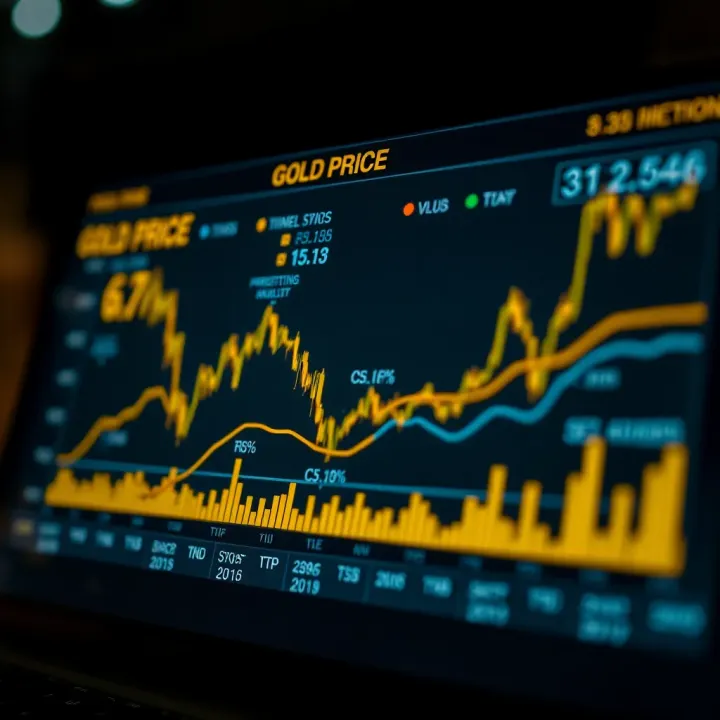
Key drivers of gold price predictions include:
Economic indicators: Inflation figures, interest rate changes by central banks like the South African Reserve Bank (SARB), and unemployment rates influence gold’s appeal as a safe haven.
Market trends: Supply and demand shifts, mining production levels, and jewellery consumption in markets such as India and China directly affect gold prices.
Geopolitical events: Political unrest, trade tensions, and policy changes often push investors towards gold as a store of value, impacting short- and medium-term forecasts.
Currency movements: The US dollar price dominates gold trading worldwide. Fluctuations in the dollar’s strength have a knock-on effect on gold’s Rand price.
Predictions use a mix of historical data, technical analysis, and expert sentiment, but unexpected events like sudden strikes at South African mines or Eskom load-shedding can disrupt the market.
Understanding the methods behind these forecasts is just as important as grasping the factors themselves. Technical analysis looks at price charts and trendlines, while fundamental analysis weighs economic data. Combining both approaches offers the most reliable insight.
Ultimately, being aware of these factors puts you a step ahead when evaluating price movements. It’s not about guessing the exact price but recognising how different influences tip the scales. Whether you’re following JSE developments, global mining reports, or geopolitical shifts, staying informed helps you navigate the gold market's twists and turns with confidence.
Understanding the forces behind gold price fluctuations is vital for anyone dealing in this precious metal. Investors and financial analysts need to pay close attention to these drivers to make informed decisions and manage risks effectively. This section focuses on the specific economic and geopolitical elements that commonly sway gold prices, with practical examples to show their real-world impact.
Inflation and interest rates play a key role in gold valuation. When inflation rises, the purchasing power of cash drops, pushing investors towards gold as a store of value. For example, in South Africa, periods of rising inflation often see more individuals and institutions buying gold to hedge against rand depreciation. Meanwhile, higher interest rates tend to dampen gold demand as they raise the opportunity cost of holding non-yielding assets like gold. When the South African Reserve Bank (SARB) hikes rates to combat inflation, the allure of gold can weaken, especially for short-term traders.
Currency fluctuations and the US dollar widely influence gold prices since gold is priced internationally in US dollars. A weaker dollar usually makes gold cheaper for holders of other currencies, boosting demand and prices. Conversely, a stronger dollar can make gold less attractive, dragging prices down. Traders in Gauteng and Cape Town, following the rand’s movements against the dollar, often adjust their gold exposure accordingly during volatile times, particularly if the rand weakens sharply.
Global economic growth and uncertainty also affect gold’s appeal. In times of slowing growth or looming recession, uncertainties rise and investors seek safer assets. For instance, during global supply chain disruptions caused by the pandemic, gold saw price surges as confidence in traditional markets dimmed. Local factors, like economic challenges in developing countries or changes in commodity demand, feed into this too, influencing gold’s safe-haven reputation.
Political instability and conflicts regularly push gold prices higher. Events such as elections with unclear outcomes, government upheavals, or armed conflicts create uncertainty in markets. In South Africa, municipal elections with unpredictable results sometimes see a modest increase in local gold demand as nervous investors adjust portfolios. On the global stage, conflicts in the Middle East or trade tensions between major economies have repeatedly triggered spikes in gold prices.
Safe-haven demand during crises highlights gold’s longstanding role as a financial refuge. During periods of crisis—be it economic, health, or political—investors turn to gold to preserve wealth. For example, when the COVID-19 crisis intensified globally in 2020, demand for gold soared, reflecting its role as a buffer against market shocks. This demand often elevates gold prices beyond what basic supply and demand might suggest.
Gold’s price movements are rarely the result of a single factor; instead, they reflect a complex mix of economic metrics and geopolitical shifts. Keeping an eye on these key influences offers investors practical tools to navigate this market confidently.
By focusing on these factors, traders and analysts can better anticipate possible price movements and position their investments accordingly.
Predicting gold prices isn't just guesswork; it relies on various methods that help traders, investors, and analysts make more informed decisions. These methods combine economic data, market behaviour, and mathematical models to capture the complex movements of gold. Understanding these approaches gives you a clearer edge when assessing gold price forecasts.

Supply and demand fundamentals drive gold's price in a very direct way. When gold mining output drops because of strikes or geological challenges, the supply tightens, which tends to push prices up. Meanwhile, demand springs from diverse sources: jewellery, industrial use, and especially investment demand during uncertain times. For instance, during periods of heightened inflation or geopolitical unrest, investors often flock to gold, raising its price because of its safe-haven appeal.
Central bank reserves and policies also significantly sway gold prices. Many central banks, including those in South Africa and globally, hold substantial gold reserves as part of their foreign exchange assets. When they increase these reserves—maybe buying gold to diversify away from the US dollar—it can signal confidence in gold’s value and push prices higher. Conversely, if a country sells off large gold holdings, it typically weighs on the market. Interest rates and monetary policy decisions taken by central banks indirectly shape gold prices, too, by influencing inflation expectations and currency strength.
Chart patterns and trend lines help traders read the market sentiment in gold’s price action. By plotting recent highs and lows, investors can spot recurring formations like "head and shoulders" or "double tops", which historically signal reversals or continuations in price trends. If, for example, gold breaks past a key resistance level established by a trend line, it often triggers buying interest that drives prices higher. This approach suits short to medium-term traders who rely on timing their moves.
Indicators and momentum analysis add another layer, measuring the strength behind price moves. Indicators like the Relative Strength Index (RSI) or Moving Average Convergence Divergence (MACD) reveal whether gold is overbought or oversold and hint at possible price corrections. If the RSI shows gold is heavily overbought, some traders might expect a pullback, adjusting their positions accordingly. Tracking momentum helps prevent chasing trends too late and manages risks better.
Econometric models use historical data and economic relationships to forecast gold prices quantitatively. By incorporating variables like inflation rates, interest rate spreads, and currency exchange rates, these models attempt to explain and predict price changes. For example, a model might show that rising US inflation tends to push gold higher by a certain percentage within three months. While these models rely on sound statistics, they must be updated regularly to remain relevant as economic conditions evolve.
Machine learning approaches represent a newer frontier in price forecasting. These methods use computer algorithms that sift through massive datasets—from economic indicators to social media sentiment—to detect complex, nonlinear patterns humans might miss. They can improve short-term predictions or flag unusual market conditions early. However, machine learning models depend heavily on quality data and can be prone to overfitting if not carefully managed.
Combining these methods—fundamental insights with technical signals and quantitative models—offers a well-rounded perspective on gold price movements. This blend helps balance the risks inherent in any one approach.
Understanding these key prediction methods arms you with practical tools to navigate the often volatile gold market better.
Keeping an eye on recent trends and predictions for gold prices is key for anyone involved in trading or investing in the metal. This section offers concrete insights into how current movements and forward-looking forecasts help you understand market dynamics better. They provide a reality check beyond theory, giving practical pointers on when to buy, hold, or sell.
Over the previous year, gold has responded noticeably to major global developments. For instance, during periods of heightened geopolitical tension—like unexpected conflicts or diplomatic standoffs—gold prices spiked as investors sought safety. The Russia-Ukraine conflict, for example, pushed gold prices higher as uncertainty gripped markets worldwide.
Similarly, central bank decisions on interest rates have had a significant influence. When the US Federal Reserve raised rates, gold generally took a knock due to higher real yields attracting investors to other assets. On the flip side, prolonged concerns about inflation and economic slowdown revived interest in gold as a hedge, creating fluctuations that traders needed to read closely.
Gold doesn’t move in isolation; its price often shows an inverse relationship with the US dollar and bond yields. When the dollar weakens, gold usually gains, making it cheaper for holders of other currencies. Conversely, when bond yields rise, the opportunity cost of holding non-yielding gold increases, putting downward pressure on prices.
Interestingly, gold sometimes displays a muted correlation with equities. In times of market stress, stock indexes may plunge while gold shines as a safe haven. For example, during recent stock market jitters caused by inflation fears, many investors moved funds into gold to preserve capital. Understanding these correlations helps investors balance portfolios more strategically.
A key feature of recent gold price forecasts is a general cautious optimism among analysts. Many expect prices to hold steady or rise modestly due to persistent inflationary pressures and ongoing global uncertainties. For example, some South African financial institutions predict gold will benefit if global economic instability persists, supporting demand from both investors and central banks.
The consensus often points to a range rather than a specific figure, reflecting inherent market volatility. Investors should thus treat these projections as guideposts for potential price bands, not guarantees.
Not all experts see eye to eye, though. Some forecast a dip in gold prices if the global economy recovers faster than expected or if interest rates rise sharply to tame inflation. Others warn that renewed geopolitical upheavals or supply chain shocks could elevate gold further.
These varying views underline the importance of monitoring multiple sources and developing your own informed stance. Rather than rely solely on a single forecast, consider how different scenarios would affect your investments. This approach reduces risk and equips you for various market outcomes.
Staying updated on gold price trends and analysing forecasts critically gives you a leg up in navigating the metal’s often unpredictable market.
In sum, tracking the recent past alongside diverse forecasts offers practical wisdom. It’s about understanding what’s driving gold prices now and what might lie ahead, enabling smarter moves whether you’re a trader or a long-term investor.
Gold price predictions can be tempting to rely on, but investors should approach them with a clear understanding of their limitations and risks. Predicting gold prices involves many variables, some of which are unpredictable or subject to sudden change. Being aware of risk factors and aligning your investment strategy with your time horizon are critical to making informed decisions and avoiding surprises.
Gold markets are notoriously volatile. Prices can swing sharply within short periods due to unexpected shifts in investor sentiment or external events. For instance, during times of global uncertainty, such as a sudden escalation in international conflicts or changes in monetary policy by major central banks, gold can spike rapidly. Conversely, if confidence rises in equities or the US dollar strengthens, gold prices may drop just as quickly.
Investors must recognise that no forecast can guarantee accuracy, since gold is influenced by a complex mix of factors like geopolitical tensions, economic data releases, and currency fluctuations. For example, many were caught off guard by the gold price dip in 2022 following initial optimism in inflation data, showing the difficulty in relying on predictions alone.
Economic shocks, such as unexpected interest rate hikes by the South African Reserve Bank (SARB) or sudden changes in inflation trends, can disrupt gold price predictions. During the COVID-19 pandemic, gold prices saw sharp rises and falls reacting to lockdown measures and stimulus packages worldwide. Similar shocks—like abrupt commodity price changes or a sudden rand depreciation—can ripple through gold markets.
Understanding these shocks helps investors keep a cautious eye on their portfolios. Suppose an investor relied heavily on a steady gold price rise in 2023; a sudden SARB rate hike might prompt quick repositioning to avoid losses. Being flexible to react to such turning points can be the difference between protecting capital and suffering setbacks.
Your investment horizon strongly colours how you should interpret gold price predictions. Short-term traders look to capitalise on quick price swings, using technical analysis and news to decide entry and exit points. They must stay alert to intraday volatility and geopolitical news that can move markets suddenly.
Long-term holders treat gold as a store of value and hedge against economic uncertainty or currency weakness over years. They tend to tolerate short-term dips better, knowing gold often recovers and preserves wealth amid broader financial market ups and downs. For instance, South African investors holding gold ETFs or physical bars over several years often see gains despite interim volatility due to rand weakness.
Using gold price predictions as a sole guide can be risky; diversification remains crucial. Including gold as part of a broader portfolio—alongside equities, bonds, property, and cash—spreads risk and reduces dependence on any single asset’s forecast.
Diversification can also mean mixing gold products: physical bullion, exchange-traded funds (ETFs), mining shares, or derivatives. Each behaves differently under certain market conditions, offering some buffer when gold prices fluctuate unexpectedly. Aligning your gold exposure with your overall strategy and risk appetite helps build resilience against forecast errors and volatile markets.
Remember, gold price predictions are just one tool among many. Combining them with sound risk management and clear strategy will serve investors better than chasing every forecast.
In short, staying realistic about what predictions can offer, preparing for sudden shifts, and keeping strategy and diversification front of mind can go a long way in helping investors navigate gold markets effectively.
💰 Understand today’s gold price predictions: factors like economy, market trends & geopolitics influence prices. Learn how to interpret forecasts for smarter investing.📈
🔍 Explore key price action patterns that help you read market moves more clearly and trade smarter without depending on complex indicators. 📈 Ready to improve your charts skills?
Learn how to forecast Ripple (XRP) prices in South Africa 🚀 using technical and fundamental analysis 📊, market sentiment insights, and risk management tips 📉.
🔍 Explore what drives Solana's price, from tech updates to investor mood, and get a clear view of what the future might hold for SOL value in South Africa.
Based on 15 reviews