

Understanding Peer-to-Peer Trading in South Africa
🔍 Explore how peer-to-peer (P2P) trading reshapes asset exchanges in South Africa, highlighting local practices, risks, benefits, and safety tips.
Edited By
Thomas Harding
Demo trading accounts serve as a practical tool for anyone stepping into the financial markets, particularly for South African traders navigating the complexities of forex, shares, commodities, and indices. These accounts simulate real trading environments using virtual money, allowing users to experiment with strategies without risking actual cash.
Unlike live trading accounts, demo accounts offer the full suite of broker features—real-time price feeds, charting tools, and order execution—without financial consequences. For example, a Johannesburg-based trader can practise buying and selling currency pairs like USD/ZAR or trading shares listed on the JSE using a demo platform, honing skills before committing real funds.
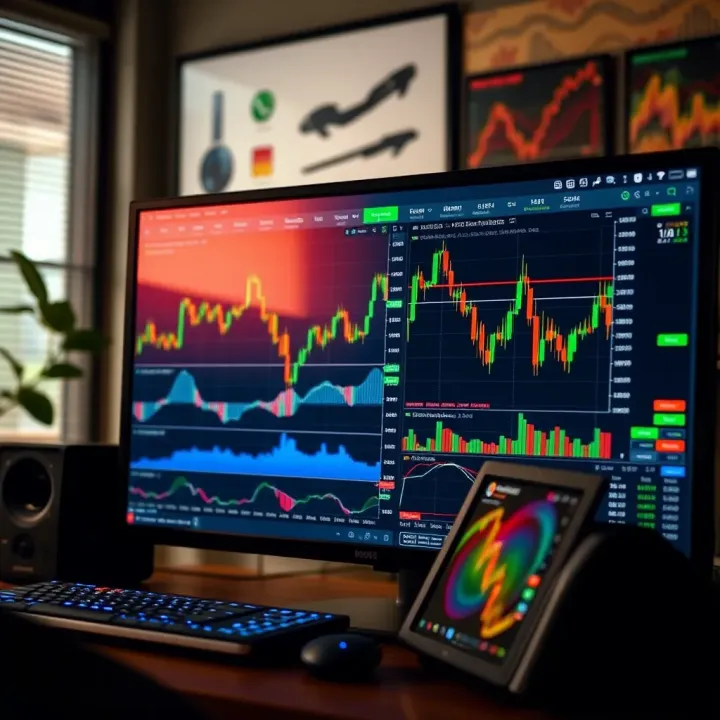
South African traders benefit notably from demo accounts due to local market quirks like the impact of Eskom loadshedding on market timing or the volatility in the rand. Practising in a risk-free setting builds confidence in handling these variables and understanding slippage or spreads in real conditions.
However, demo accounts are not perfect replicas. The emotional pressure of risking one’s own money is absent, and some brokers’ demo platforms do not mirror live market liquidity perfectly, potentially leading to order execution discrepancies. Still, they remain invaluable for testing new tactics or learning platform navigation.
Using a demo account is like practicing your passes on the soccer field before the big match – it prepares you but doesn't quite match matchday nerves.
Risk-free environment to understand market mechanics
Opportunity to test new strategies or automated systems
Familiarisation with broker platforms, including mobile apps
Demo prices and execution may subtly differ from live markets
Lack of real emotional stakes can alter decision-making
Some brokers might limit demo features or use outdated data
Starting out with a demo account sets a solid foundation, especially in South Africa’s diverse trading conditions. It equips traders with firsthand experience of market operations, helping better manage real trades when the time comes.
Next, we'll look at how these accounts genuinely work and address common misconceptions among new traders.
A demo trading account offers a risk-free gateway into the financial markets. It allows traders to practise buying and selling shares, currencies, or commodities as if they were trading live, but without the worry of losing real cash. This kind of account is crucial for South African traders who want to get hands-on experience before committing money, especially with the volatility often seen in local and global markets.
A demo account recreates a trading platform where you can engage with live market data but using virtual funds. This means the prices you see and the market movements reflect real-world conditions, yet you’re not actually risking any Rand. For example, if the JSE Top 40 index drops or rallies, that change registers immediately in your demo account. This helps you gauge how trades might perform without feeling the sting of actual loss. It’s like driving a car on a closed circuit before heading onto busy Gauteng roads.
With no real money on the line, demo accounts allow you to explore and make mistakes safely. You can test different entry and exit strategies or try new tools on your broker’s platform without worrying about blowing your budget. This helps especially new traders who often hesitate to jump into live trading due to fear of losing cash. The peace of mind here is invaluable — you learn how to navigate, analyse, and execute without blowing your R500 or more on rookie errors.
Most demo platforms pull in real-time market data from exchanges like the JSE or international venues. This means the bid and ask prices, charts, and news updates you'll see closely imitate what happens in live markets. Your orders are entered on the platform just like in real trading, showing fills and cancellations. For instance, if you place a limit order to buy Sasol shares at a certain price, the demo account will show whether that order would have been executed or not at that moment.
However, there are subtle but important differences. Demo accounts typically don’t capture the emotional pressure of risking real money, which affects decisions. They may also differ in execution speed or slippage — the difference between expected and actual trade prices — especially during volatile sessions. For example, during heavy market swings caused by international news, your demo trades might execute smoothly, while live trades could see delays or partial fills. Additionally, some brokers simulate spreads or offer slightly better pricing in demo mode to provide a more user-friendly experience.
While demo accounts closely replicate live trading environments, remember that the actual experience of trading with your own money cannot be fully simulated. Use demo trading to build skills and confidence, but prepare for the realities of emotional and market factors in live trading.
Understanding these basics helps South African traders take full advantage of demo trading. It’s a practical step to sharpen skills with zero financial risk, while recognising some limits before stepping into the live arena.
Demo trading accounts offer significant benefits to both new and experienced traders by providing a safe environment to learn and test without risking real money. Their practical value lies in enabling users to familiarise themselves with trading mechanics and strategies before diving into the unpredictable live markets.

When you start trading, knowing how different order types work is essential. A demo account lets you experiment with market orders, limit orders, stop-loss orders, and more without the fear of losing cash. For example, you can practise placing a stop-loss order to limit losses on a volatile share or test how a limit order executes at your specified price. This hands-on experience helps you grasp the timing and execution of trades — essential skills for managing risk effectively in South African markets.
Charts and technical indicators are fundamental tools traders rely on to make decisions. Demo accounts allow you to apply technical analysis techniques—like spotting support and resistance levels, trendlines, or trading using moving averages—without financial consequences. Suppose you want to try out a popular strategy such as the Relative Strength Index (RSI) to identify overbought or oversold conditions on JSE stocks. Using a demo platform to watch these indicators react over time can boost your confidence and sharpen your interpretation skills before you commit real rand.
Every trader has a unique style, whether it’s day trading, swing trading, or position trading. A demo account lets you test several approaches to see what suits your temperament and goals. You might try forex scalping in the morning and longer-term commodity trades in the afternoon to observe how these strategies perform without risking a cent. This trial-and-error process is critical to avoid costly mistakes once switching to a live account.
Demo accounts also provide a chance to assess your broker's platform quality and services. South African traders should pay attention to the user interface, order execution speed, and available support channels. For instance, using a demo account for a few weeks can reveal whether a broker like EasyEquities or IG offers smooth navigation and reliable data feeds, which are crucial when time is of the essence. Plus, it allows you to test deposit and withdrawal processes, especially local payment methods such as EFT and SnapScan, ensuring convenience when you move to live trading.
Taking full advantage of a demo trading account can save you both time and money by preparing you practically and mentally for the realities of live trading in volatile markets.
Demo accounts are valuable stepping stones — use them to build a solid foundation before risking real capital.
Despite their usefulness, demo trading accounts come with specific limitations South African traders should consider. These accounts simulate real market conditions, but they can’t fully replicate the complexities and pressures of live trading. Understanding these challenges helps set realistic expectations and prepares you for the real trading environment.
One of the biggest differences between demo and live trading is the absence of real financial risk. When trading with virtual money, it’s easy to take trades without genuine concern about losing cash. For example, a trader in Johannesburg might enter a risky forex trade on a demo account simply because there’s no real money on the line. This lack of pressure means emotional responses like fear or greed don’t kick in the same way.
Emotions strongly influence trading decisions when actual money is involved. In demo trading, decision-making can become mechanical or overly confident because the psychological stakes are low. This disconnect can lead you to develop habits that don't translate well when trading live. For instance, switching between multiple strategies quickly on a demo might work fine, but live trading demands greater discipline and consistency — qualities often tested by real financial pressure.
Demo accounts often operate on delayed or simplified market data and can’t always mimic real market volatility accurately. The bid-ask spreads or sudden price jumps you experience in a Johannesburg stock brokerage’s live market feed may not appear the same in demo mode. This gap can create an illusion that trading is easier than it really is. South African traders might find, for example, their demo results showing smooth price movements, unlike the sometimes erratic swings seen during volatile periods like political elections or sudden Eskom load shedding announcements.
In live trading, execution speed and slippage — the difference between expected and actual trade prices — matter a lot. Demo accounts often execute orders instantly without delays or price slippage, which isn’t realistic. In the busy markets on the JSE (Johannesburg Stock Exchange) or forex platforms, latency can cause trade fills at worse prices than expected, affecting profitability. So, relying completely on demo account results might lead to underestimating the impact of these factors when you transition to real money trading.
Demo accounts offer a valuable sandbox to learn and practise, but recognising these limitations prevents false confidence and prepares you better for the realities of financial markets.
Understanding these challenges means South African traders should use demo accounts as one tool among many, pairing them with education about real market psychology and practical experience under live conditions — even if starting with small amounts.
Using a demo trading account properly can make a big difference for South African traders stepping into the markets. It’s not just about clicking buttons without losing money—it's about building solid trading habits, understanding the quirks of local brokers, and preparing mentally and practically for live markets. Knowing how to maximise these trial accounts helps avoid costly beginner mistakes and develop strategies that could work when real money is on the line.
In South Africa, regulation is crucial. Always choose brokers regulated by the Financial Sector Conduct Authority (FSCA). This ensures the broker complies with local laws designed to protect clients' funds and promote fair trading practices. For example, some overseas platforms promise low spreads or high leverage but lack FSCA oversight, increasing risks for local traders.
Trading with an FSCA-regulated broker not only boosts confidence but also means you benefit from consumer protection measures. This matters since a demo account from an unregulated broker might not reflect the same security and trading conditions you'll encounter with a properly licenced platform.
Another important factor is the availability of local support and convenient deposit methods. Brokers with South African customer service teams and local payment options like EFT transfers or PayFast tend to simplify the trading experience. For instance, funding your account through a bank like FNB or Standard Bank speeds up transactions and reduces hassle compared to international methods.
If a platform offers only foreign payment systems or slow withdrawals, it can discourage transitioning from demo to live trading. Local support also helps resolve issues faster, be it technical glitches or questions about platform features, which is a great boon during crucial trading hours.
Approach demo trading with the mindset of a real account. Allocate fixed times for it, maintain a trading journal, and avoid 'gambling' with virtual money just because it's not real. For instance, a trader might limit themselves to practising entry and exit strategies on a ‘demo’ for one hour a day, maintaining discipline and seriousness.
Taking demo trading seriously trains your brain to recognise patterns and decisions that aren't clouded by reckless risk-taking. This disciplined approach helps shape the right habits before risking any Rand in live markets.
Track your trades closely: note which strategies work, where execution slowed, and how emotional responses affect decisions—even on a demo. If you find your demo account execution differs wildly from live market orders, it’s time to question the reliability of the broker or your strategy.
Use demo results not just as a green light to start live trading but as a diagnostic tool to correct weaknesses. Some traders set specific targets such as achieving 70% profitable trades over a month with a demo account before opening a live position—even if it means starting with a small amount like R500 and scaling up gradually.
Remember, a demo account isn't merely a playground but a training ground. It helps South African traders sharpen skills, navigate broker specifics, and approach live markets with clearer expectations and better preparation.
Moving from a demo trading account to live trading marks a significant step in a trader’s journey. While demo accounts provide a zero-risk environment to practise, live trading introduces real stakes and emotional challenges that can affect decision-making. Recognising when you're ready to switch and managing the transition carefully can improve your chances of long-term success.
Before making the jump to live trading, you need to see consistent performance over a reasonable period on your demo account. It’s not just about a lucky streak; steady profits with manageable losses show that your strategy has been tested across different market conditions. For instance, if you have traded for at least 3 months and can explain why specific trades succeeded or failed, you’re likely developing the confidence needed for the real markets.
On top of consistency, you should feel comfortable executing your strategy without hesitation. This confidence comes from practice and understanding your risk management—knowing when to cut losses or take profits. If you find yourself second-guessing your demo trades regularly, it might be worth more time practising before switching.
Live trading brings factors you won’t fully experience on a demo account, such as slippage, partial fills, and wider spreads during volatile periods. Plus, the emotional impact of real money at risk can lead to impulsive decisions, like overtrading or moving stop losses prematurely.
For South African traders, additional factors like load shedding or internet connectivity issues can affect trade execution. Being prepared for these challenges and having a plan to protect your capital is crucial. Understanding these risks means you're better equipped to handle unexpected moves without panic.
It’s wise to begin live trading with smaller position sizes than you used on your demo account. This approach helps reduce emotional pressure and limits potential losses while you acclimatise to the real trading environment. For example, if your demo trades were sized at R10,000, consider starting with R2,000 or less in live conditions.
As you gain experience and maintain discipline, gradually increasing your trade size makes sense. Scaling slowly lets you adjust to the psychological demands without risking your entire capital too soon.
Discipline is the backbone of successful trading, especially when money is on the line. Emotions like fear and greed can cloud judgement, causing rash decisions like revenge trading after losses or holding losing positions too long.
To stay on track, create strict trading plans before you start, including entry and exit rules, and stick to them. Many South African traders benefit from journaling trades to reflect on their mindset and behaviour. Taking breaks after significant losses or wins helps reset emotions and avoid burnout.
Remember, trading with real money requires not only good strategy but also emotional resilience and steady discipline.
In summary, transitioning from demo to live trading isn’t just about being right on your calls—it's about managing risk, emotions, and practical realities in the South African trading landscape. Taking measured steps and maintaining a disciplined mindset paves the way for more rewarding trading experiences.
🔍 Explore how peer-to-peer (P2P) trading reshapes asset exchanges in South Africa, highlighting local practices, risks, benefits, and safety tips.

📈 Master smart trading in South Africa with practical strategies, market tips, risk control, and mindset skills for better investment decisions. 🇿🇦

Explore how global demand, economy, and geopolitics drive silver prices in South Africa. Get insights for investors and traders for smarter decisions 📈💰

Explore how retail traders shape South Africa's markets 📈, their strategies, challenges, and the tech influence driving smarter trading decisions 💡.
Based on 9 reviews