
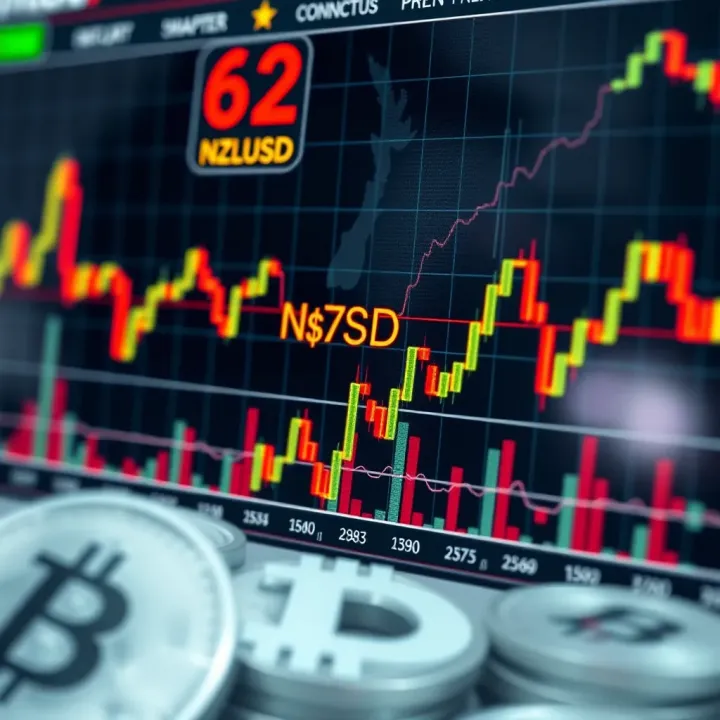
NZDUSD Outlook: Key Trends to Watch
📉 Explore key drivers of NZDUSD: economic data, market trends, central bank moves & global factors shaping currency shifts in coming months 🔍
Edited By
Amelia Clark
Understanding the Nasdaq forecast today means more than glancing at a number or trendline. It requires unpacking the movements of market sectors, the impact of economic data, and the sway of global events.
The Nasdaq Composite Index, largely tech-heavy, reacts strongly to earnings reports from giants like Apple, Microsoft, and Tesla. Their quarterly results often set the tone for broader market sentiment. For instance, a weaker-than-expected profit announcement from a major tech player can send ripples through investor confidence, pushing indexes downward within hours.

Economic indicators, such as the US Consumer Price Index (CPI) or unemployment figures, also play a big part in forecast shifts. Rising inflation numbers generally lead to expectations of tighter monetary policy by the US Federal Reserve. This, in turn, can cool enthusiasm for growth stocks weighted in the Nasdaq, given their sensitivity to interest rates. Traders need to watch these releases closely, as sudden moves often follow, impacting short-term prices.
Global events, from geopolitical tensions in Eastern Europe to developments in China's regulatory landscape, influence sentiment. The interconnectedness of markets means that a disruption in one region can affect Nasdaq valuations nearly immediately.
Consider this practical approach when assessing today's Nasdaq forecast:
Check economic calendars for key data releases.
Monitor corporate earnings schedules to anticipate volatility spikes.
Stay informed on geopolitical news that might sway investor risk appetite.
The Nasdaq forecast is a snapshot of diverse forces interacting—understanding these factors helps traders and investors make informed decisions instead of reacting to headline noise.
In short, the forecast is dynamic and demands active, critical attention to multiple moving parts rather than simple trend-following. This approach can sharpen your market insight and help manage risks more effectively.
Understanding the current market conditions alongside the Nasdaq index offers a crucial snapshot for anyone invested or interested in US equities, especially those tracking tech-heavy growth. The Nasdaq serves not only as a barometer for technology sectors but also reflects broader investor sentiment and economic pulse. Being clued up on recent moves and market mood can help you anticipate potential turning points and make informed decisions quickly.
Key index movements in the past weeks have been notable, with the Nasdaq showing fluctuations tied closely to economic signals and earnings results. For example, if the index rises steadily over a few weeks amid strong corporate earnings reports from giants like Apple, Amazon, or Nvidia, it usually signals robust investor appetite in tech. On the flip side, quick drops following weaker-than-expected results or worries about inflation dampen enthusiasm. Staying vigilant on these movements can help you spot short-term trading opportunities or decide when to hold firm.
Investor confidence and market volatility tend to travel hand-in-hand. When confidence is high, the Nasdaq typically enjoys more stable or upward trends. However, periods of heightened volatility, often stirred by geopolitical tensions or unexpected economic data, see investors pulling back or swinging between stocks quickly. An example is when sudden news about US interest rate shifts rattles tech stocks, leading to sharp day-to-day price swings. For investors, understanding the level of volatility helps tailor risk management – whether to tighten stops or reduce exposure.
Comparison with other major indices such as the Dow Jones Industrial Average or the S&P 500 paints a fuller picture. While the Nasdaq leans heavily on technology stocks, these other indices may include more industrial, financial, or consumer goods firms. For instance, the Dow might show steadier performance when tech stumbles, indicating a rotation within the market. Examining these differences guides investors on sector rotations and diversification strategies.
Economic data releases are front and centre for Nasdaq movements. Reports like US inflation figures, unemployment rates, or consumer spending often trigger immediate reactions. For example, an unexpected rise in inflation might prompt fears about aggressive interest hikes, spooking tech stocks reliant on cheap borrowing. Conversely, positive jobs data could boost confidence about economic recovery, lifting the index.
Corporate earnings results remain one of the most tangible influences. Each quarterly earnings season brings a rush of announcements from Nasdaq-listed companies. Strong earnings, especially from heavyweights like Microsoft or Tesla, usually pull the Nasdaq higher, reflecting healthy margins and growth prospects. Conversely, a string of misses or cautious guidance can cast a shadow over the market.
Global geopolitical influences add another complex layer. Trade tensions between the US and China, fresh sanctions, or instability in key regions can rattle global markets and the Nasdaq. For instance, escalating disputes might slow supply chains for semiconductor chips, hitting tech production and shares. Investors should watch these developments closely, as unexpected geopolitical shifts often lead to abrupt market adjustments.
Keeping an eye on the Nasdaq in context—its recent performance, investor mood, and external influences—provides a practical edge for savvy market players. It’s about reading the rhythm of market moves and knowing what triggers to expect.
Economic indicators play a significant role in shaping the Nasdaq's direction. Traders and investors closely watch these data points as they often signal changes in economic health that directly impact stock prices, especially for technology-heavy indices like the Nasdaq. Understanding these indicators helps market participants anticipate shifts in sentiment and adjust strategies accordingly.
Central bank policies, especially those of the South African Reserve Bank (SARB) and the US Federal Reserve, carry substantial weight in Nasdaq movements. Both institutions adjust interest rates based on economic conditions, which in turn affect borrowing costs and consumer spending. For instance, when the Federal Reserve signals rate hikes to curb inflation, tech stocks on the Nasdaq often face downward pressure due to higher capital costs and reduced valuations.
Meanwhile, SARB decisions can influence local investors’ appetite for offshore assets, including Nasdaq-listed shares, as exchange rates and interest differentials shift. Recent Federal Reserve communications have drawn attention to the gradual tightening cycle, making market watchers cautious about Nasdaq's short-term upside.

Inflation trends also steer investor behaviour. Rising inflation typically push yields higher, which can dampen growth stock valuations prevalent on the Nasdaq. South African investors, keen on US inflation figures, often respond swiftly when monthly Consumer Price Index (CPI) data deviates from expectations. For example, a sharp uptick in US inflation can tip markets towards sectors less sensitive to interest rates, leading to rotation away from tech stocks in the Nasdaq.
Unemployment statistics and labour market health offer clues about economic momentum. Lower unemployment rates generally signal increased consumer spending, which can boost earnings for Nasdaq companies reliant on consumer demand. For South African investors watching the US labour market, monthly Non-Farm Payroll (NFP) reports often trigger noticeable Nasdaq swings due to their implications for Fed monetary policy.
Consumer confidence, meanwhile, influences how people spend and invest. Strong confidence can accelerate demand for technology products and services, pushing Nasdaq tech giants higher. Conversely, dips in confidence linked to inflation worries or job security can curb consumer tech purchases, undercutting these companies’ stock performance.
Understanding these economic indicators provides traders with a clearer picture of when the Nasdaq might find support or face pressure, helping them to navigate market volatility with greater confidence.
In short, keeping a finger on interest rate signals, inflation data, employment numbers, and consumer sentiment offers valuable insights into Nasdaq trends. Seasoned investors blend this data with corporate earnings and geopolitical factors to form a balanced view for decision-making.
Corporate earnings serve as a vital barometer for the Nasdaq, directly reflecting company health and influencing investor sentiment. Performance across different sectors signals shifts in economic trends and guides portfolio adjustments. This section breaks down how sector-specific earnings reports affect Nasdaq movements and what investors should watch for.
Tech giants like Apple, Microsoft, and Nvidia frequently release quarterly earnings that can sway the Nasdaq. Their results not only show how companies perform individually but also hint at wider industry trends such as demand for semiconductors or cloud services. For example, a stronger-than-expected earnings report from Nvidia can boost investor confidence in AI-related stocks, causing a ripple effect through the tech-heavy index.
Monitoring earnings in this sector helps traders anticipate possible price swings in tech shares. Since the technology sector makes up a significant portion of the Nasdaq, gains or losses here often set the tone for the entire index. Investors should pay attention to revenue growth, profit margins, and guidance for upcoming quarters to gauge momentum.
Healthcare companies in the Nasdaq, such as Biogen and Moderna, have shown growing importance amid ongoing demand for biotech innovation and pandemic-related treatments. Their earnings reports often highlight R&D progress and regulatory approvals, which can either lift or drag the sector depending on outcomes.
Consumer discretionary stocks, including firms like Amazon and Netflix, reflect changing consumer behaviour and economic sentiment. Rising sales during festive seasons or new product launches tend to bolster shares, while supply chain issues or reduced spending power may weigh on them. These sectors provide clues on domestic consumer confidence and economic resilience, aspects that investors track closely.
Sector rotation, where investors move money between growth stocks (often tech firms expected to grow faster) and value stocks (companies seen as undervalued with steady dividends), affects Nasdaq volatility. When interest rates rise, value stocks tend to gain favour as safer bets, potentially dragging growth stocks down.
For instance, if inflation worries push investors towards value sectors like utilities or financials, Nasdaq’s tech-heavy composition may suffer temporarily. Understanding this rotation helps investors adjust their asset allocation as market conditions change.
Global economic factors and overseas markets heavily impact Nasdaq sector performance. For example, a slowdown in China can reduce demand for tech exports, weighing on semiconductor companies. Conversely, growth in emerging markets often boosts consumer discretionary stocks linked to global supply chains.
Investors should watch currency fluctuations, trade policies, and international events that can shift capital between sectors. Such cross-border influences magnify or soften domestic sector trends, affecting Nasdaq’s overall direction.
Keeping a close eye on corporate earnings and sector rotation provides a practical edge. By understanding which sectors lead or lag, investors can better time their buys and sells in a market as dynamic as the Nasdaq.
Interpreting Nasdaq forecasts is an essential skill for anyone involved in the markets, from traders to financial analysts. These forecasts provide insights into possible future movements, influenced by a mix of economic indicators, corporate results, and geopolitical events. Understanding these projections helps investors time their entry and exit points, avoid unnecessary risks, and align their strategies with market realities.
Forecasting stock indices like the Nasdaq usually involves several common approaches. Technical analysis relies on past price and volume patterns to predict future trends. For example, traders often watch moving averages or RSI indicators to spot potential trend reversals or continuation. On the other hand, fundamental analysis considers economic factors such as interest rates, inflation, and corporate earnings to assess the broader market’s direction.
Some analysts combine these approaches in quantitative models that crunch historical data and current metrics to generate projections. These models can include machine learning algorithms or regression analyses that pick up subtle market patterns. While these tools offer practical guidance, their output should be taken as possibilities, not certainties.
However, all forecasts come with limitations and uncertainties. Market sentiment can shift abruptly in response to unexpected news—say, a surprise interest rate hike by the US Federal Reserve or a major geopolitical development like trade sanctions. Such events can quickly render even the most carefully crafted models obsolete. Additionally, forecasts often assume historical relationships hold true, but structural changes in the economy or new regulations can break these patterns.
When it comes to using these forecasts, there’s a big difference between short-term trading and long-term holding. Short-term traders might use forecasts to make quick decisions, capitalising on predicted market swings. They might notice, for example, that technical indicators suggest the Nasdaq is due for a correction, prompting them to sell or hedge their positions.
Long-term investors use forecasts differently, focusing on broader economic trends and corporate health. For instance, if forecast models indicate a likely slowdown in the tech sector due to rising borrowing costs, a long-term investor might adjust their portfolio to reduce exposure to vulnerable companies and increase holdings in defensive sectors.
Risk management becomes crucial, especially amid volatile market conditions like those caused by Eskom’s loadshedding or global uncertainties. Investors can use stop-loss orders or diversify across sectors to protect against sudden downturns. Practical risk management means not putting all your eggs in one basket and being ready to adjust your strategy if forecasts prove off the mark.
Mastering how to interpret Nasdaq forecasts and apply them wisely helps you navigate uncertainties, make informed decisions, and position your portfolio to withstand sudden market shifts.
Understanding the risks and external factors that influence the Nasdaq is key for anyone involved in trading or investing. These elements can shift market dynamics quickly, affecting prices and volatility. Without grasping how things like geopolitical events or regulatory changes play out, you run the risk of making decisions based on outdated or incomplete information.
Market participants should keep a close eye on external shocks—they often have an outsized impact on tech-heavy indices like the Nasdaq.
Trade conflicts, such as tariffs or sanctions between major economies, can hit Nasdaq-listed companies hard, especially those with global supply chains. For example, when the US and China impose tariffs on each other's tech goods, it can disrupt production costs and sales channels for firms like Apple or Nvidia. This uncertainty typically leads to stock price swings as investors reassess earnings prospects.
Such tensions also influence investor sentiment, often triggering broader market sell-offs or rotations out of tech stocks into safer assets. For South African investors, understanding these dynamics helps in timing entries and exits, especially when global tech companies react sharply to policy announcements.
Political unrest—whether through elections, protests, or sudden leadership changes—can rattle markets globally. When instability arises in key economies, it often results in increased volatility on the Nasdaq. For instance, sharp shifts in US fiscal policy following elections can cause unpredictable moves in tech stocks due to changes in tax or regulatory outlooks.
Similarly, international conflicts or crises can prompt risk-off behaviour among investors, leading to Nasdaq declines as money flows to traditional safe havens like gold or government bonds. Monitoring geopolitical hotspots and political calendars therefore informs traders about potential periods of heightened market risk.
The regulatory environment significantly shapes Nasdaq companies' profitability and strategies. Changes in data privacy laws, antitrust investigations, or digital taxation can directly affect giants like Google, Facebook, and Amazon. For example, stricter data protection regulations in the EU have forced tech firms to adjust how they handle user information, sometimes leading to costly compliance requirements.
In South Africa, regulators are also increasing scrutiny on fintech and digital firms, which signals that similar pressures could soon extend to local and international companies listed on Nasdaq. Investors must weigh the potential costs of compliance and the risk of fines or restrictions when considering tech stock exposure.
Beyond regulatory impacts, emerging technologies define the Nasdaq’s long-term growth story. Areas like artificial intelligence (AI), quantum computing, and 5G networks attract major investment and drive stock performance. For instance, companies leading 5G infrastructure development have shown strong Nasdaq gains reflecting market optimism about future earnings.
Staying informed about which technologies have real potential versus mere hype allows investors to position portfolios smartly. South African traders might follow shifts in sectors gaining momentum globally and consider how local demand, such as increased internet penetration and mobile usage, supports these trends.
Understanding these risks and external factors equips traders and investors with the insight needed to anticipate market moves. Watching geopolitical tensions, regulatory shifts, and technological advancements closely can help you navigate the Nasdaq effectively and manage your exposure wisely.
📉 Explore key drivers of NZDUSD: economic data, market trends, central bank moves & global factors shaping currency shifts in coming months 🔍
Discover the latest updates on silver prices, demand, and tech uses 💰 Explore key insights for investors in South Africa's dynamic silver market 📈
📈 Discover what drives platinum prices in South Africa, from demand and supply to geopolitical shifts and new tech, guiding investors in a changing market.

📈 Learn key factors shaping Nasdaq predictions, expert insights, and forecasting methods to help South African investors navigate market trends with confidence.
Based on 13 reviews