
QXBroker Overview for South African Traders
Explore QXBroker's platform, regulation, account types, and trading tools designed for South African traders. Make informed decisions with trusted insights 📊🌍
Edited By
Emily Clarke
Trading foreign exchange (FX) in South Africa involves risks not often apparent to newcomers, especially regarding margin calls. A margin call happens when your trading account’s equity falls below the broker’s required minimum margin, typically because the market has moved against your position. This event signals that you need to add more funds or close losing trades to avoid automatic closure of positions.
Understanding how margin calls work is essential for managing risks effectively. Leverage plays a key role here. South African traders commonly use leveraged accounts to amplify their exposure, sometimes as much as 100:1 or more. While leverage magnifies potential profits, it also increases losses, bringing margin calls closer if markets shift quickly.
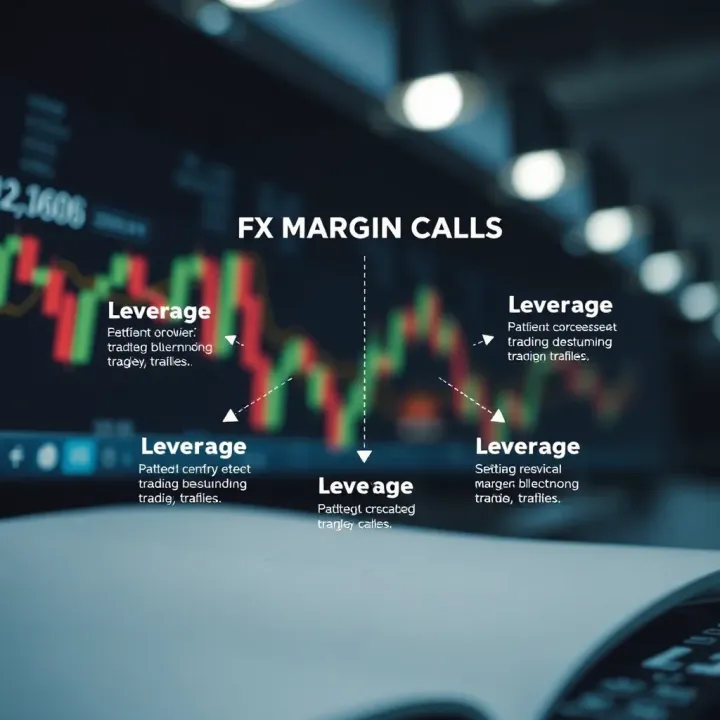
A margin call is not a warning you want to ignore; it directly affects your ability to stay in the game. If your account can't cover the losses, brokers will usually close losing positions without notice to protect both parties.
In practice, suppose you open an FX position on EUR/USD using R10,000 with 50:1 leverage. You’re controlling a R500,000 position. If the market moves against you by even a small fraction, your margin might dip below the maintenance level your broker requires, triggering a margin call.
South African brokers may have different margin call thresholds and maintenance margins, so checking your broker’s specific policies is crucial. Some brokers offer margin call alerts via email or SMS, which can help you act before the situation worsens. However, relying solely on alerts is risky; actively managing your risk by setting stop losses or reducing leverage is smarter.
Key points to keep in mind:
Monitor your margin levels regularly to avoid surprise calls.
Understand your broker’s margin call and stop out policies.
Use leverage conservatively to maintain adequate buffer funds.
Have a clear risk management plan, including exit points.
For South African traders, where economic volatility, currency swings, and the effects of loadshedding can impact market conditions, controlling margin risks is particularly important. Proper knowledge and proactive strategies help prevent margin calls from wiping out your capital quickly.
This article will guide you through the essential facts about FX margin calls and how you can manage them efficiently in the South African context.
In forex trading, understanding what an FX margin call means is vital for traders who use leverage to amplify their positions. At its core, a margin call happens when the value of your trading account falls below the minimum margin required by your broker. This alert signals that your open trades are eating too much into your available capital and demand immediate action to avoid forced closures.
For traders in South Africa, where market volatility can be sharp and leverage common, knowing how margin calls work helps prevent unpleasant surprises and preserves your trading capital. It’s not just about avoiding losses; it’s about managing trades responsibly to ensure your funds last longer in the market.
Margin is the amount of money a trader must have in their account to open and maintain a leveraged position. Think of it like a good faith deposit: the broker holds it as security to support your trades. For example, if you want to control R100,000 worth of currency with 1% margin, you'll need R1,000 in your account to open the position.
The practical relevance is clear — margin lets you control bigger trades without needing the full amount upfront. However, it also means your account can quickly shrink if the market moves against you.
Leverage is the tool that increases your exposure without needing extra cash. Using leverage of 100:1 means you can control R100 for every R1 of your own money. This amplifies both profits and losses. While leverage gives South African traders, with smaller account sizes, a chance to access larger trades, it also raises the risk of margin calls if those trades go sour.
Suppose you have R5,000 in your account and want to buy USD/ZAR with 50:1 leverage. This means you control R250,000 in USD/ZAR. If the ZAR weakens against the USD by 1%, your position grows by R2,500 — a 50% gain on your initial R5,000. But if the pair moves against you by 1%, your loss also hits R2,500, which puts a substantial dent in your account.
A margin call is triggered when your account’s equity (balance plus floating profits and losses) falls below the broker’s required maintenance margin. This can happen if your trades lose value or if you open new positions without enough free margin. For South African traders, sudden market moves or volatile currency pairs like USD/ZAR or GBP/ZAR can rapidly trim account equity, triggering a margin call.
Brokers continuously track margin utilisation and free margin to ensure clients can cover their open positions. When margin levels fall to a certain percentage—often around 100%, but this varies by broker—they issue a margin call as a warning. If conditions worsen to a critical level (e.g., margin level below 50%), the broker may automatically close losing positions to protect both themselves and the trader.
A margin call is essentially a warning that your account needs attention before losses worsen. It encourages you to either add funds or reduce positions. A stop out, by contrast, is when the broker starts closing your losing trades automatically to restore sufficient margin. The stop out level is always below the margin call threshold and happens without your direct input.
For example, if your broker sets 100% margin call and 50% stop out, you’ll get a margin call alert when your margin level hits 100%, but the broker only starts closing positions automatically once it hits 50%.
Understanding these fundamentals helps traders in South Africa make better decisions when opening positions and managing risks, especially in a market impacted by sharp rand moves and regional economic news.

Understanding how margin calls impact your trading account is vital for managing risks effectively. When traders use leverage in forex trading, their account balance can quickly change — sometimes for the worse. A margin call occurs when the equity in your account falls below the required margin level, prompting your broker to act to prevent further losses.
One of the immediate effects of a margin call is the forced closure of losing trades. Brokers do this to curb losses that exceed your account balance. Imagine you’ve opened several positions, and the rand is suddenly volatile due to unexpected economic news. If your account equity can no longer cover the required margin, the broker will automatically close some positions, starting with the ones losing the most. This protects both you and the broker from going into the red.
When a margin call hits and positions close, your available trading capital drops. This limits your ability to open new trades or keep existing ones running. For example, if you had R10,000 in your trading account but a margin call forced closure of trades that ate into half your funds, you’re left with just R5,000 to work with. This shrinking capital can quickly restrict your trading flexibility and halt your investment plans until you recapitalise your account.
Some brokers charge fees or penalties when margin calls occur or accounts fall below maintenance margin levels. This varies widely between brokers, especially between South African local firms and international ones. It's worth reading the broker’s terms carefully because unexpected fees can erode your capital further. For example, a small South African broker might charge a R200 fee per margin call event, which adds up if your trades are particularly risky or if the market is choppy.
A margin call is a warning that your account equity is below the required margin, often giving you a chance to add more funds or close losing trades yourself. The stop out level, however, triggers automatic position closures without warning once your equity falls to a critical point. Think of a margin call like your broker tapping you on the shoulder to say, "Hey, add funds or adjust your trades," while stop out is the broker stepping in to pull the plug.
Margin calls typically occur when your equity hits around 100% of the required margin but varies by broker. Stop outs usually happen at lower margins, like 50% or less, depending on your broker's policies. For example, a broker might require you to maintain a margin level above 100%, then start closing positions when it drops below 50%.
A margin call gives you the opportunity to react and manage positions, potentially avoiding forced closures. If ignored, a stop out closes positions automatically, often at unfavourable prices, locking in losses. This can quickly drain your account, making recovery harder. For South African traders dealing with volatile pairs like USD/ZAR during times of economic uncertainty, understanding this difference can mean the difference between managing losses and being wiped out.
Keeping a close eye on your margin levels and broker agreements can save you from costly surprises and help you trade more confidently in South Africa’s forex markets.
Understanding the factors that increase the risk of margin calls helps traders manage their exposure and avoid sudden account liquidations. For South African traders, where leverage and volatile currency pairs are common, appreciating these risks is essential to safeguard their investments.
Trading with high leverage means you control a larger position with a smaller deposit. While this magnifies potential profits, it also increases the risk of losses hitting your account quickly. For example, if you use 1:100 leverage on a R10,000 account, a 1% move against your position can wipe out your entire deposit fast. This leaves little margin for error, especially when market swings are bold.
Volatile currency pairs add another layer of risk. Pairs like USD/ZAR or USD/TRY can experience sharp moves caused by economic data, political changes, or even Eskom’s loadshedding impacting investor sentiment in South Africa. Such unpredictability can trigger margin calls even if your position size seems reasonable on paper.
For instance, during times of rand weakness, sudden moves against your trade can blow through your margin threshold faster than expected. It’s crucial to monitor news and economic indicators closely to anticipate such volatility.
Managing the size of your trades relative to your account balance is a key practice. Putting too much of your capital into a single position means any adverse move can quickly erode your margin buffer. If you have a R5,000 trading account, opening a position worth R100,000 exposes you to greater risk than if you stuck to a smaller trade.
Smaller accounts naturally carry more vulnerability. A modest market move, say a 0.5% adverse shift, hits them harder in percentage terms than larger accounts with more cushion. This means even a few trades can drain the account if not sized carefully.
To balance risk and reward, traders often use fractional position sizing — risking only a small percentage of the account per trade, typically between 1% and 3%. This approach helps to stay clear of margin calls and preserve capital for future opportunities. Using stop-loss orders alongside sensible position sizes further strengthens control over potential losses.
Regularly reviewing your position sizes and leverage settings in line with your account balance and market conditions reduces the chance of nasty surprises like margin calls.
By appreciating how leverage, volatility, and trade sizing interplay, South African traders can navigate forex markets smarter, avoiding unexpected margin calls that disrupt their trading plans.
Managing margin calls isn’t just about avoiding losses — it’s about keeping control of your trading and protecting your capital. South African traders need to be especially vigilant because market swings, local economic shifts, and exchange rate fluctuations can hit margin levels faster than expected. Paying close attention to your margin status lets you act before brokers shut positions down automatically.
Most trading platforms available to South African traders, like MetaTrader 4 or 5, provide real-time updates on your margin utilisation. This makes tracking your available margin straightforward. For instance, if your account balance drops due to an unprofitable trade, your platform will update your margin level immediately, allowing you to see if you’re approaching a margin call.
Setting up personalised alerts through these platforms or your broker's app can save you from nasty surprises. You can receive notifications when your margin level hits a critical threshold, such as 50%, which warns you before the broker steps in. Imagine you’re trading the rand against the US dollar and sudden volatility lowers your margin level; an alert gives you time to add funds or close trades before the situation worsens.
Using stop-loss orders is one of the simplest yet most effective ways to manage risk. By setting a stop-loss, you tell the platform to automatically exit a trade once your losses hit a predefined level, limiting further erosion of your capital. For example, if you buy the USD/ZAR pair at 15.00, a stop-loss at 14.80 caps your exposure to those 20 cents of difference, protecting your margin.
Limiting leverage is equally important. High leverage might look attractive, but it multiplies risks. If a South African trader opts for 1:100 leverage, just a 1% move against their position could wipe out their capital. Sticking to a more conservative ratio, like 1:10 or 1:20, helps prevent rapid margin depletion.
Diversifying your trading positions also plays a role. Placing all your funds into one volatile currency pair invites trouble. Instead, spread risk by trading multiple pairs or including less volatile assets. For example, combining trades in USD/ZAR with EUR/USD or GBP/USD can balance the risks tied to domestic factors affecting the rand.
If you get a margin call, the quickest way to regain breathing room is by adding funds to your account. This replenishes your margin and may prevent automatic closure of positions. South African traders should consider transfer speed and costs from local banks or e-wallets to ensure timely deposits.
Alternatively, closing losing positions deliberately can free up margin but requires careful decision-making. Instead of waiting for the broker to liquidate your trades, closing losing ones lets you manage losses on your terms and focus on more promising setups.
Don’t underestimate the value of communicating with your broker. South African brokers often provide client support to explain margin call policies or negotiate temporary solutions. This dialogue might grant you extra time to fund your account or adjust positions, especially during high volatility caused by local events or global shocks.
Keeping close tabs on your margin levels and taking early action can save your account from unnecessary losses. Practical risk management isn’t optional — it’s the foundation of consistent trading success.
Understanding broker practices and policies around margin calls is essential for South African traders who want to manage their risk effectively in the forex market. Different brokers enforce margin calls differently, impacting how and when your positions may be closed or when additional funds are necessary. Being familiar with these rules helps you avoid surprises and better plan your trading strategy.
South African brokers usually set a minimum margin level—often around 100%—below which they issue a margin call, asking traders to deposit more funds or to close some positions. If the margin level falls further, around 50% or less, the broker may start automatically closing positions to prevent losses from exceeding the account balance, a process known as a stop out. For example, a broker like IG South Africa applies clear thresholds so traders always know when they’re in danger of a margin call.
These rules are practical safeguards tailored to the local market environment, especially considering the volatility traders face with currencies such as USD/ZAR. Understanding these thresholds helps traders anticipate when to act and maintain a healthy balance.
Local brokers often have more conservative margin call policies reflecting South African regulatory requirements and market practice. They tend to enforce tighter rules on leverage, usually capping it at 1:100 or lower, compared to international brokers that might offer higher leverage up to 1:500 or 1:1000.
International brokers may offer tempting leverage levels but might not provide the same level of localised customer service or awareness of SA-specific risks like exchange rate shifts or load-shedding impacts on connectivity. Hence, local traders often find that sticking with brokers regulated by the Financial Sector Conduct Authority (FSCA) ensures better protections during margin events.
Before opening an account, carefully read the broker's margin and leverage terms. Look for details such as the initial margin required, maintenance margin levels, and how quickly margin calls happen after the margin level drops. This info is critical to avoid sudden call-ins that can catch a trader off guard.
For example, if a broker requires a maintenance margin of 50%, you should monitor your equity closely to stay above that. Also, check if the broker allows varying leverage depending on the currency pair or account type, so you can align your trading plan accordingly.
Another sign of a reliable broker is strong customer support and access to educational materials. Brokers like Standard Bank Online Trading and EasyEquities offer ready help through chat, calls, or email to explain margin calls and assist when you need to manage your positions urgently.
Educational resources that explain margin mechanics, risk management, and platform tools empower traders to handle margin calls better. This support can be invaluable, especially if you’re new to forex or trading in leveraged products. Always opt for brokers who walk you through these aspects rather than leaving you to figure out complex rules alone.
Selecting a broker without understanding their margin call policies is like driving a bakkie in heavy traffic without knowing the brake sensitivity—you risk skidding when you least expect it. Know your broker’s terms upfront to trade confidently.
In sum, familiarising yourself with the margin call practices of South African brokers, comparing local versus international offerings, and assessing broker terms and support structures thoroughly, forms the foundation for safer, smarter trading in the FX market.
Explore QXBroker's platform, regulation, account types, and trading tools designed for South African traders. Make informed decisions with trusted insights 📊🌍

📈 Explore signal trading for South African traders: learn how to pick reliable signals, balance pros and cons, and boost your market moves effectively.
Discover why RCG Markets.com stands out for South African traders 🌍—covering platforms, account types, regulation & user-friendly services in detail.
📊 Explore Pocket Options tailored for South African traders! Learn registration, trading types, tools, pros, risks & tips to trade smarter today. 🇿🇦
Based on 14 reviews