

Understanding Peer-to-Peer Trading in South Africa
🔍 Explore how peer-to-peer (P2P) trading reshapes asset exchanges in South Africa, highlighting local practices, risks, benefits, and safety tips.
Edited By
Elizabeth Harding
Derivative trading stands as a key component of modern financial markets. It involves buying and selling financial contracts whose value depends on an underlying asset, such as stocks, bonds, commodities, or currencies. Unlike directly owning the asset, derivative trading offers a way to gain exposure to price movements without physical possession.
One common example is a futures contract, where two parties agree to buy or sell an asset at a fixed price on a set future date. Local farmers might use futures to lock in prices for maize or wheat before harvest, reducing uncertainty caused by market swings. Traders and investors use similar tools to manage risk or speculate on different price outcomes.
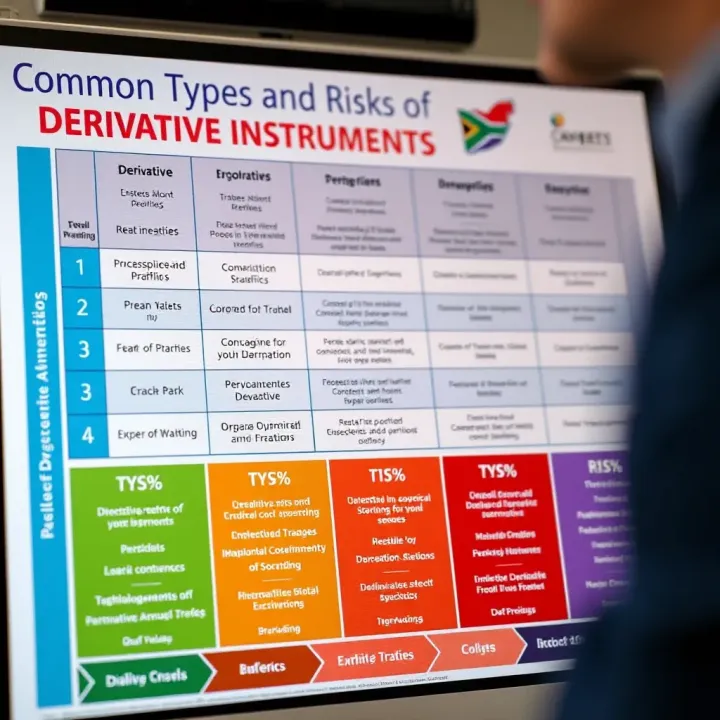
There are several types of derivatives frequently traded in South Africa's markets, including:
Futures: Contracts with obligations to buy/sell assets at future dates.
Options: Rights, not obligations, to trade assets later at agreed terms.
Swaps: Agreements to exchange cash flows or assets over time.
Forwards: Similar to futures but traded over-the-counter rather than on an exchange.
Derivative trading delivers practical benefits for investors and institutions. It allows for effective risk management through hedging, helping manage exposure to currency shifts, interest rate changes, or commodity price fluctuations. At the same time, derivatives can increase market liquidity and provide alternative paths for portfolio diversification.
However, these benefits come with risks. Derivatives can be complex and may amplify losses due to leverage. Understanding the specific contract terms and involved risks is essential before trading.
South Africa has established regulatory frameworks to oversee derivative markets to protect investors and maintain market integrity. The Financial Sector Conduct Authority (FSCA) supervises market participants, while the Johannesburg Stock Exchange (JSE) provides platforms for cleared and transparent derivatives trading.
For traders and investors in Mzansi, becoming familiar with how derivatives operate and their local regulations is vital. Practical considerations include:
Assessing your risk profile and investment goals.
Gaining in-depth knowledge of different derivative types.
Keeping up with exchanges’ rules and regulatory requirements.
Considering costs such as margin requirements and transaction fees.
In sum, derivatives offer versatile tools to navigate financial markets’ ups and downs. With careful research and a clear strategy, you can incorporate them into your investment approach with confidence and discretion.
Understanding the basics of derivative trading is fundamental for anyone looking to participate in financial markets, whether as a trader, investor or analyst. Derivatives are powerful tools that can help manage risk, enhance returns, or speculate on price movements—yet they come with their own complexities. Grasping how they work and the terminology involved enables better decision-making and reduces costly mistakes.
Derivatives are financial contracts whose value depends on the price of an underlying asset, such as shares, commodities, currencies or interest rates. Rather than owning the asset directly, participants enter into agreements based on anticipated price changes. For instance, a maize farmer might use derivatives to lock in a selling price months before harvest, protecting against seasonal price drops. Buyers and sellers deal in contracts like futures and options to manage exposure or bet on movements.
In South African markets, derivatives are used to transfer risk between parties. For example, a factory relying on imported steel might buy futures contracts to hedge against rand fluctuations and steel price hikes. These contracts are traded on exchanges like the JSE’s derivatives market or over the counter, depending on the instrument. Prices fluctuate based on factors affecting the underlying asset, market sentiment, and supply-demand dynamics. When the contract matures, settlements occur either by physical delivery or cash payment, depending on the agreement.
Knowing the right terms is essential to trade effectively. Here are a few you need to be familiar with:
Underlying asset: The financial asset or commodity the derivative’s value is based on.
Expiry date: When the derivative contract ends or settles.
Strike price: The predetermined price at which an option can be exercised.
Margin: Funds required to open and maintain a position, acting as a security deposit.
Leverage: Using borrowed funds to increase exposure, magnifying gains and losses.
Understanding these basics shores up your foundation, helping you navigate derivative trading with greater confidence and practical insight.
With this grounding, you'll be better placed to explore specific types of derivatives and how they fit into your strategies.
Derivatives come in several forms, each with its own role and purpose in the financial markets. Understanding the common types helps traders and investors select the right tools for their strategies—whether hedging risk or seeking profitability through speculation.
Futures are standardised agreements to buy or sell an asset at a set price on a future date. They trade on formal exchanges like the Johannesburg Stock Exchange (JSE), which provides transparency and regulation. A local example is a maize farmer locking in a selling price months before harvest to avoid the risk of falling market prices. Futures are commonly used for commodities, currencies, and index tracking. They offer leverage, enabling exposure to large positions with relatively small capital, but also increase risk if the market moves against you.
Options give the holder the right, but not the obligation, to buy or sell an underlying asset at a fixed price before expiry. They come in two types: calls (to buy) and puts (to sell). South African investors often use options to hedge portfolios or generate income through selling options, for instance on shares listed on the JSE. Common strategies include buying calls to profit from rising prices or putting protective puts to insure against downturns. Options pricing involves factors like time decay and volatility, so understanding these is key before trading.
Swaps are customised contracts between two parties, usually arranged outside public exchanges (over-the-counter). They can involve exchanging cash flows based on interest rates, currencies, or commodities. For example, a South African company with variable-rate debt may enter an interest rate swap to fix its borrowing costs amid fluctuating repo rates set by the South African Reserve Bank (SARB). These bespoke contracts help institutions manage specific exposures but carry counterparty risk since they lack the safeguards of exchange trading.
Knowing these common derivatives equips you to navigate their practical use and risks effectively, especially within South Africa's unique financial landscape.
By grasping futures, options, and swaps, traders can apply these instruments thoughtfully according to their financial goals, risk tolerance, and market views.
Derivatives serve two broad purposes in financial markets: managing risks and speculating on price movements. Understanding these roles is essential for traders and investors who want to navigate derivative markets effectively. These instruments offer tools to protect against adverse price swings or to capitalise on market changes, each with clear rewards and inherent risks.
Hedging is about reducing or neutralising risk. Companies and investors use derivatives to lock in prices or rates and shield themselves from unpredictable changes. For example, South African farmers might use futures contracts on maize or wheat to secure a selling price ahead of harvest. This way, even if market prices drop, their income remains relatively stable. Similarly, importers dealing in foreign currencies can enter into currency swaps or forwards to fix exchange rates, guarding against rand volatility.
Derivatives also help protect investment portfolios against downside risks. Suppose an investor holds shares in a mining company listed on the JSE; they might buy put options to insure against a sudden drop in the share price. Though this protection comes at a cost, it can be worthwhile when market uncertainty looms.
Hedging with derivatives is not about making a profit but preserving value and managing uncertainty in a pragmatic way.
On the flip side, derivatives tempt speculators looking to profit from price changes without owning the underlying asset. For instance, a trader might buy call options on a popular South African stock if they anticipate a sharp rise. The potential returns can be significant because options and futures typically require a smaller capital outlay compared to buying the asset outright — this is known as leverage.
That leverage, however, cuts both ways. While profits can multiply, losses also mount quickly, sometimes exceeding the initial investment if positions aren't managed properly. Speculators might be caught off guard by sudden market moves or volatility spikes, potentially wiping out their capital.
Moreover, the complexity of some derivatives means speculative trading demands a solid grasp of the instruments and market conditions. Without this, traders risk falling into costly mistakes.
Engaging in derivative trading brings potential rewards, but it also exposes traders and investors to various risks that need careful management. Understanding these risks is vital for anyone looking to include derivatives in their portfolio or risk strategy. This section breaks down key challenges like market and credit risks, liquidity and operational risks, and the influence of market volatility on derivative positions.
Market risk refers to the possibility that derivative values will decline due to changes in underlying asset prices, interest rates, or other market factors. For example, if you've bought a futures contract on South African government bonds and interest rates rise unexpectedly, the contract's value may tumble, causing losses. Unlike owning the physical asset, derivatives often magnify these moves because of their leverage.
Credit risk arises when one party to a derivative contract fails to meet their financial obligations. In OTC (over-the-counter) derivatives, this risk is pronounced since trades occur outside exchanges. Consider a local bank offering a swap contract; if it becomes insolvent, the other party might lose its expected payments. This risk requires traders to assess counterparty creditworthiness closely.
Both market and credit risks can lead to significant financial strain if not monitored and hedged properly. South African markets sometimes face heightened volatility due to political developments or currency pressures, adding another layer of sensitivity.
Liquidity risk involves the ability to enter or exit derivative positions without causing a significant price impact. Some derivative instruments, especially niche or complex ones, might have limited buyers or sellers, leading to wider bid-ask spreads and difficulties in closing out positions. In quieter South African derivative markets, this can be a real challenge during periods of low trading volume.
Operational risks cover failures in systems, technology, or human errors that disrupt trading activities. For instance, a glitch in a trading platform during a critical market event—or miscommunication regarding contract details—can lead to unintended trades or losses. Firms and traders should invest in robust infrastructure and adequate training to reduce these setbacks.
Volatility is a double-edged sword in derivative trading. High market swings can create profitable opportunities but also escalate risks sharply. For example, options pricing depends heavily on implied volatility; sudden spikes often cause option premiums to surge unpredictably. A trader on the wrong side of such movements, perhaps holding short options, can face severe losses.
Moreover, derivative valuations can quickly shift during periods of extreme volatility seen in South African equity markets, commodity prices (like platinum or gold), or the rand exchange rate. Traders must factor in these swings when sizing positions and planning risk mitigation.
In sum, derivative trading demands rigorous attention to risks—from market forces to operational details and volatile market behaviour. Sound risk management and a clear grasp of these challenges are indispensable for navigating the complex South African financial environment confidently.
Regulations play a vital role in ensuring that derivative trading in South Africa operates smoothly and fairly. They protect market participants from unfair practices, reduce systemic risk, and maintain confidence in the financial system. Given that derivatives can be complex and risky, understanding the local regulatory environment is crucial for traders, investors, and financial institutions to operate within legal boundaries and manage their exposure responsibly.
Several key bodies govern derivative markets in South Africa. The Financial Sector Conduct Authority (FSCA) oversees market conduct, ensuring fair treatment of consumers and integrity within the financial sector. Meanwhile, the Johannesburg Stock Exchange (JSE) regulates listed derivative products traded on its platform, such as futures and options contracts. The South African Reserve Bank (SARB) also has an indirect role by monitoring financial stability and implementing monetary policy that can influence derivative markets.
A practical example is how the FSCA supervises brokerages offering derivative products. They enforce rules to prevent mis-selling and require transparency around risks involved, which is essential for safeguarding retail investors.
Both individuals and institutions engaging in derivative trading must comply with a set of rules and procedural safeguards. Traders need to be authorised, and institutions must register with relevant bodies such as the FSCA. Compliance requirements include proper disclosure of risks, maintaining adequate capital reserves, and adhering to reporting obligations.
For instance, brokers offering derivative products in South Africa must conduct know-your-client (KYC) procedures as per the Financial Intelligence Centre Act (FICA). This helps prevent fraud and money laundering within derivative transactions. On top of that, entities must periodically submit trading reports to the FSCA and the JSE.
In recent years, South Africa has updated regulations to strengthen oversight of derivatives and align with global standards like the G20’s commitments post-2008 financial crisis. The introduction of mandatory central clearing for certain derivative contracts on the JSE helps reduce counterparty risk and increase market transparency.
Furthermore, ongoing reforms focus on improving market access while tightening controls on over-the-counter (OTC) derivatives, which historically posed greater risks due to their less regulated nature. These changes impact how banks and hedge funds structure their derivative exposures.
Staying updated on regulatory changes is key. Non-compliance can lead to heavy fines or trading restrictions, which can severely hamper trading activities.
Understanding this regulatory framework helps traders and investors navigate South Africa's derivative markets more confidently and responsibly, balancing opportunity with the need for prudence.
Getting involved in derivative trading isn’t just about picking the right product. It demands carefully weighing various practical factors to avoid costly missteps. This section touches on the essentials you should consider before diving in, from choosing the right instruments, keeping tabs on costs, to knowing how to safely access markets here in South Africa.
Not every derivative fits all trading goals or risk appetites. Say you’re a farmer in the Free State worried about maize prices crashing; futures contracts might help lock in a selling price ahead of harvest. But if you're an investor aiming for more flexible downside protection, options might be better suited. When choosing, consider your investment horizon, risk tolerance, and the underlying asset’s liquidity. Illiquid contracts or overly complex instruments can tie you down, gouging you with wider spreads or difficult-to-exit positions.
Trading derivatives often comes with an array of fees—brokerage charges, exchange fees, margin costs, and even taxes. For example, derivatives traded on the Johannesburg Stock Exchange (JSE) may include open interest fees or clearing house charges. Brokers differ considerably too; some charge flat fees, while others work on percentages of your turnover. Plus, factor in the cost of margin funding if you trade on leverage. Without accounting for these, your profits could be eaten up before you realise them.
Always ask your broker for a full cost breakdown before you start trading derivatives.
South Africans can access derivatives mainly through the JSE, which offers futures and options on equities, indices, and commodities like gold and platinum. Local and international brokers provide trading platforms—but pick one regulated by South Africa’s Financial Sector Conduct Authority (FSCA) to ensure safety and compliance. Prepaid accounts are popular for smaller retail traders, while institutional players often utilise margin accounts. Also, keep an eye on technology infrastructure; loadshedding and internet stability can disrupt your trading and place you at financial risk.
Practical considerations may feel like extra steps, but they protect your investment and improve your chances of trading success. Derivatives aren’t a quick fix, but with the right tools and planning, they can be a powerful addition to your portfolio.
🔍 Explore how peer-to-peer (P2P) trading reshapes asset exchanges in South Africa, highlighting local practices, risks, benefits, and safety tips.

📈 Master smart trading in South Africa with practical strategies, market tips, risk control, and mindset skills for better investment decisions. 🇿🇦

Discover how South African proprietary trading firms offer unique opportunities, legal insights, and challenges for traders. 📈💼 Get involved and thrive in SA markets!
🔍 Explore our detailed OlympTrade review! Discover its trading features, safety measures, and user experience tailored for South African traders. 📈💼
Based on 10 reviews